Hair Loss Treatment Cost in Vancouver: PRP Prices Explained

Hair Loss · Pricing · Vancouver

Hair Loss Treatment Cost in Vancouver: PRP Prices Explained

“How much does it cost?” is usually the first question people ask about hair loss treatment — and a fair one. Here is what PRP and related treatments typically cost in the Vancouver area, what changes the price, and how pricing works at Monarch MD.
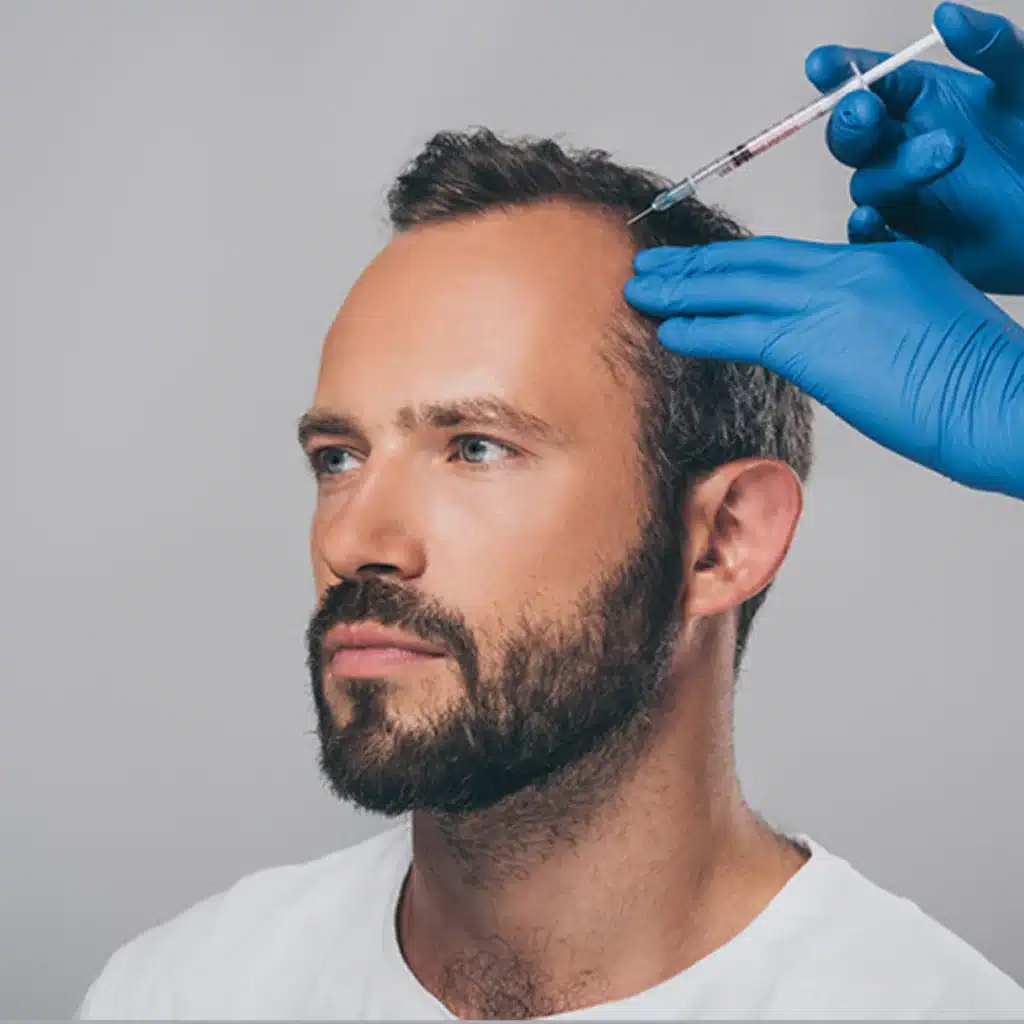
Man with a receding hairline receiving PRP scalp treatment

PRP is placed in thinning areas of the scalp.

Typical PRP prices in Vancouver

  • Single PRP hair session: generally $600–$1,400 across Vancouver-area clinics, with many clustering around $800–$1,000.
  • Initial course (3–4 sessions, about a month apart): often $1,800–$3,600 in total.
  • Maintenance: most people continue with a session every 3–6 months to hold their results.

These are general market ranges, not a quote. Your price depends on the type of hair loss you have and the specific treatment plan that suits it.

What PRP is

PRP (platelet-rich plasma) is made from a small sample of your own blood. Spinning the sample separates it into layers; the layer rich in platelets — which carry growth factors — is collected and placed in the scalp to support thinning follicles. We use a high-quality PRP kit and the U225 device for even, controlled delivery.

1. Small blood drawyour own blood2. Spun in a centrifugelayers separatePlasmaPlatelet-richplasma (PRP)Red blood cells3. PRP collectedrich in growth factors4. Placed in the scalpwith the U225 device

How PRP is prepared from your own blood.

Why people choose PRP

Our pricing: competitive because of volume

Monarch MD performs a high volume of hair treatments every week. That volume is what allows us to keep our prices competitive — without cutting corners on the parts that affect your results:

  • A high-quality, medical-grade PRP kit designed to concentrate platelets consistently.
  • The U225 device, which delivers PRP across the scalp in small, even, precisely controlled amounts.
  • Physician-led planning — every plan starts with a proper assessment, not a sales pitch.
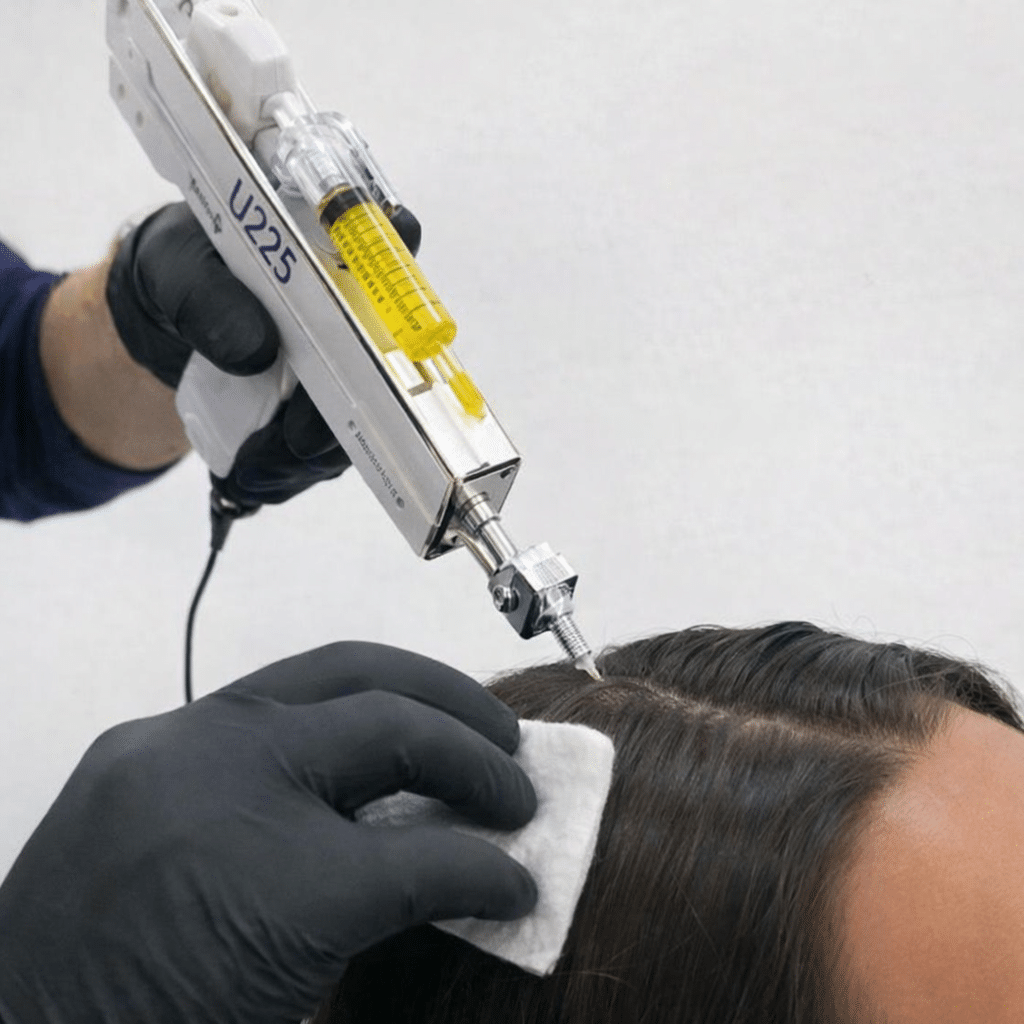
The U225 device in use, delivering PRP to the scalp along the part line

The U225 device in use: PRP delivered in small, even, controlled amounts.

What changes the price

  • Type and cause of hair loss — genetic (androgenetic) thinning, shedding after illness or pregnancy, and hormonal causes are treated differently.
  • How large the area is and how advanced the thinning is.
  • Whether PRP is combined with other treatments, such as scalp microneedling, exosomes or laser therapy.
  • The number of sessions and whether you choose a package or membership.

Treatments we offer alongside PRP

PRP works best as part of a plan. Depending on your assessment, your plan may include:

  • PRP (platelet-rich plasma) — your own concentrated platelets, placed in the scalp to support thinning follicles. Learn about PRP.
  • Exosomes — a newer regenerative treatment applied to the scalp. The research is still emerging, and we will tell you honestly what is and isn’t known.
  • GHK-Cu (copper peptide) — a peptide applied topically to the scalp. What the research shows.
  • Fotona laser scalp therapy (HaiRestart) — a gentle, non-invasive laser treatment for the scalp.
  • Medical management — evidence-backed prescription medications, such as minoxidil and DHT-blocking medicines, prescribed only after a physician assessment. Finasteride vs. dutasteride.

Prefer a monthly plan? Our Hair Lab MD membership bundles ongoing care into one monthly fee.

Start with the right diagnosis

The most expensive treatment is the one that doesn’t fit your hair loss. Our comprehensive hair analysis ($250 + GST, about 60 minutes with the physician) identifies the likely cause and ends with a clear plan and an exact quote — no guessing.

Book your hair analysis →

Real results from our clinic

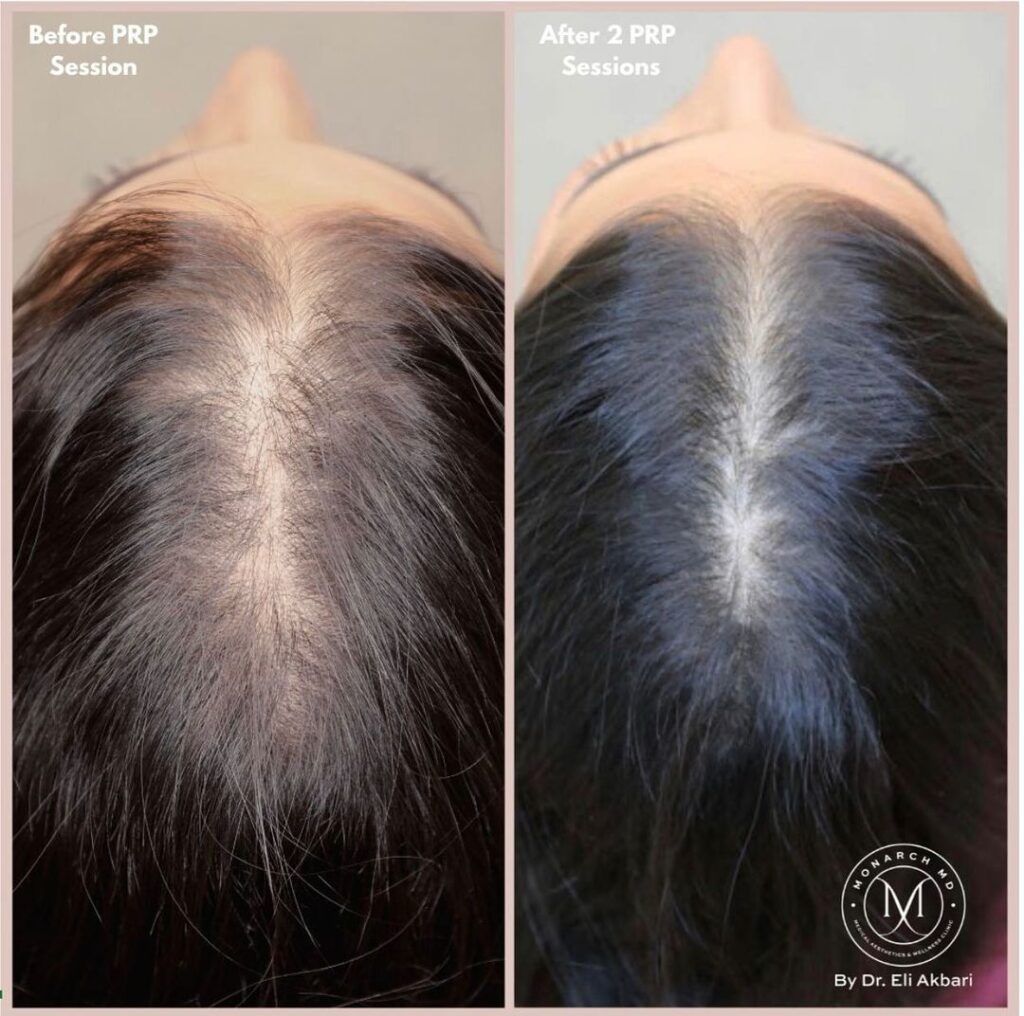
Before and after PRP: woman's part line before treatment and after 2 PRP sessions, with visibly denser hair

Monarch MD patient, before and after 2 PRP sessions. Individual results vary.
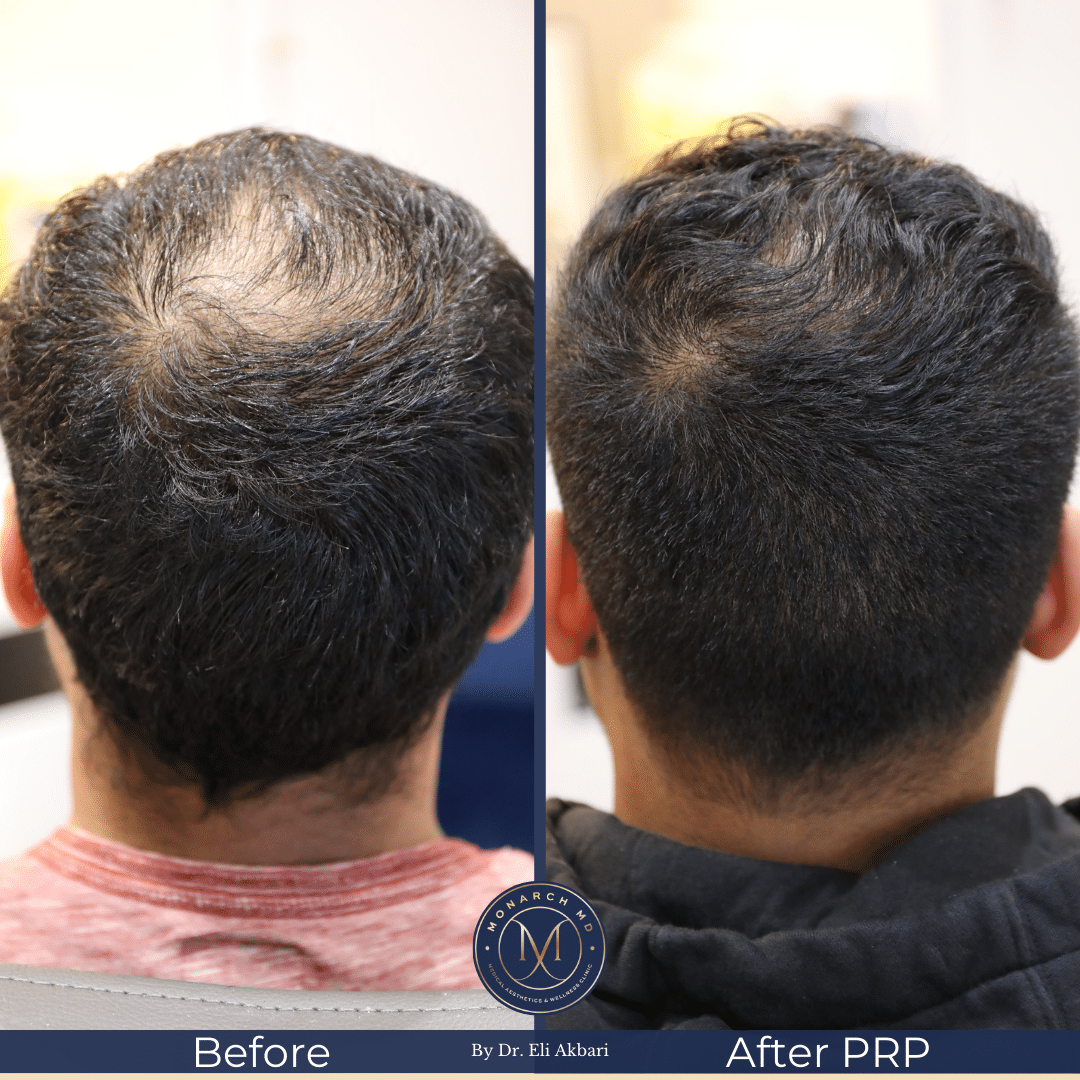
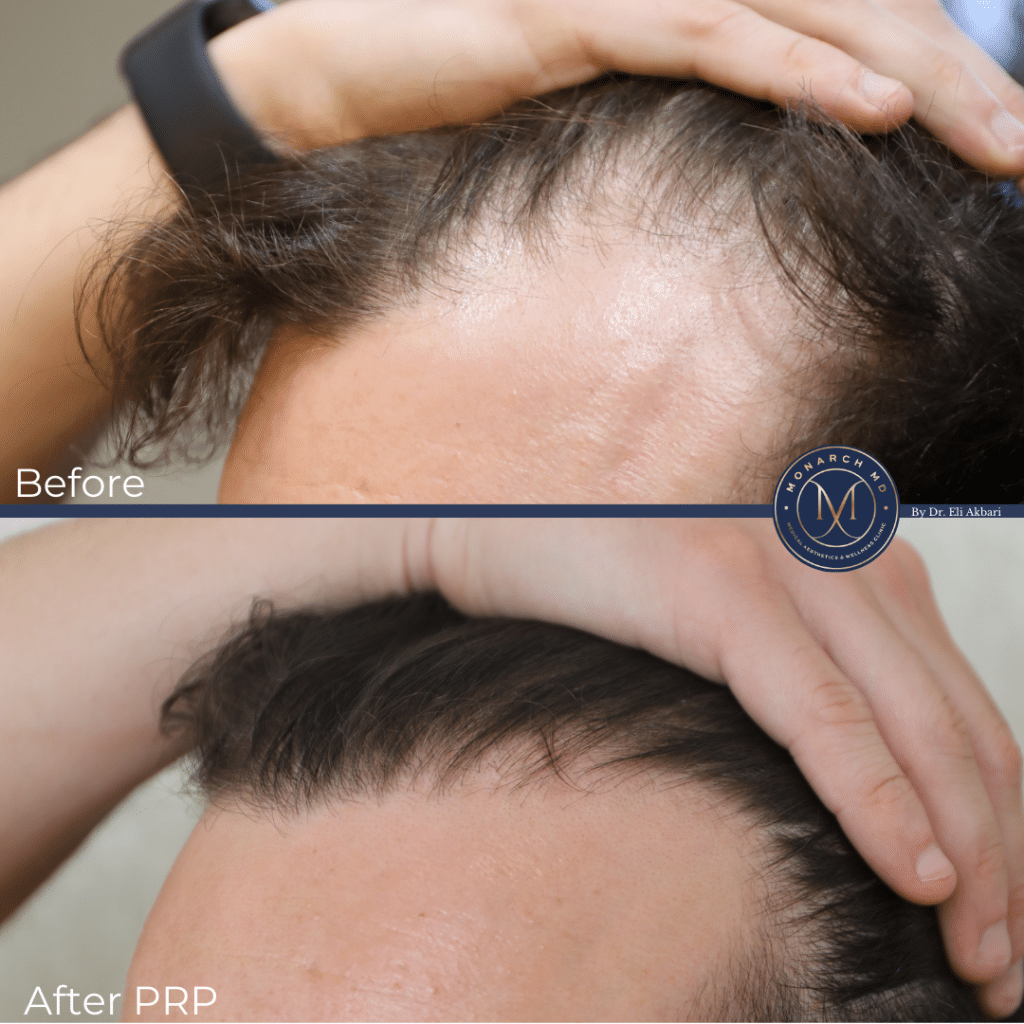
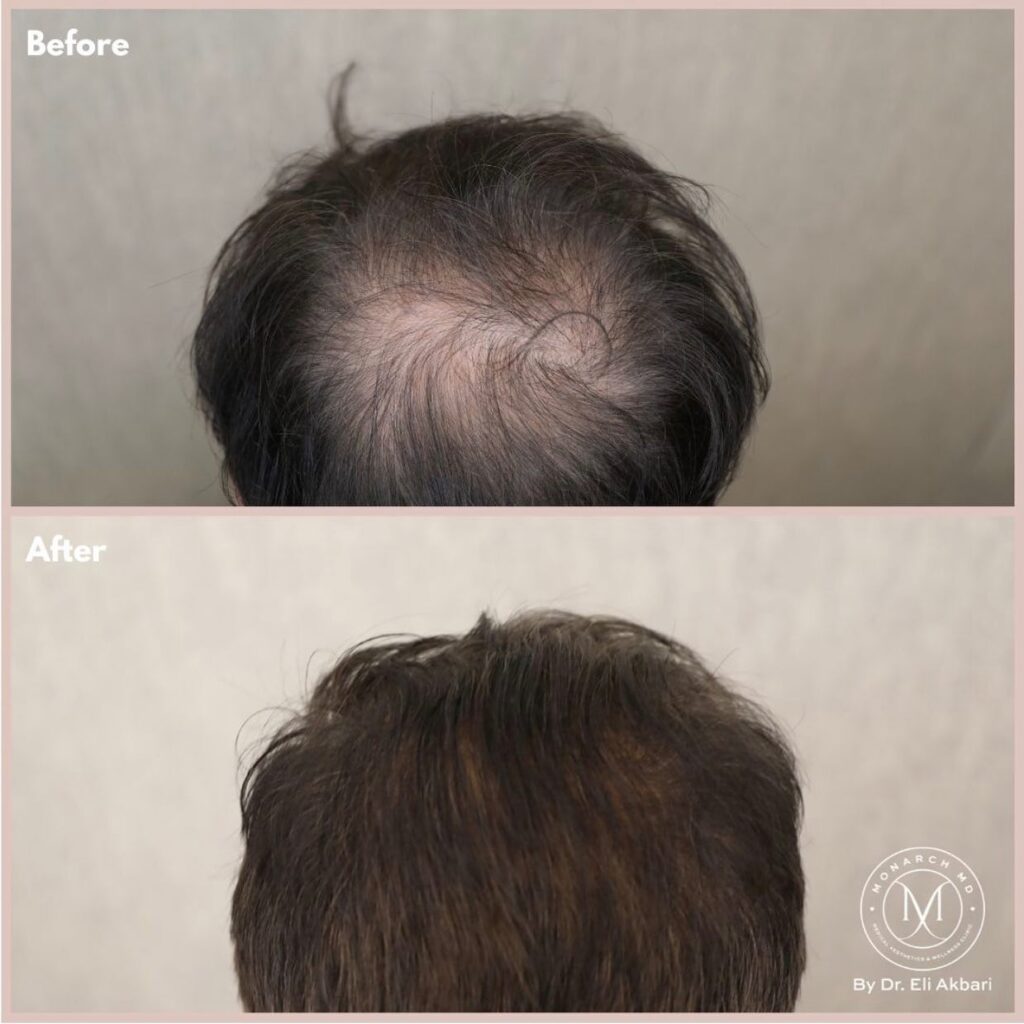
Before and after PRP: man's thinning crown seen from behind, fuller after PRP

Monarch MD patient, before and after PRP. Individual results vary.
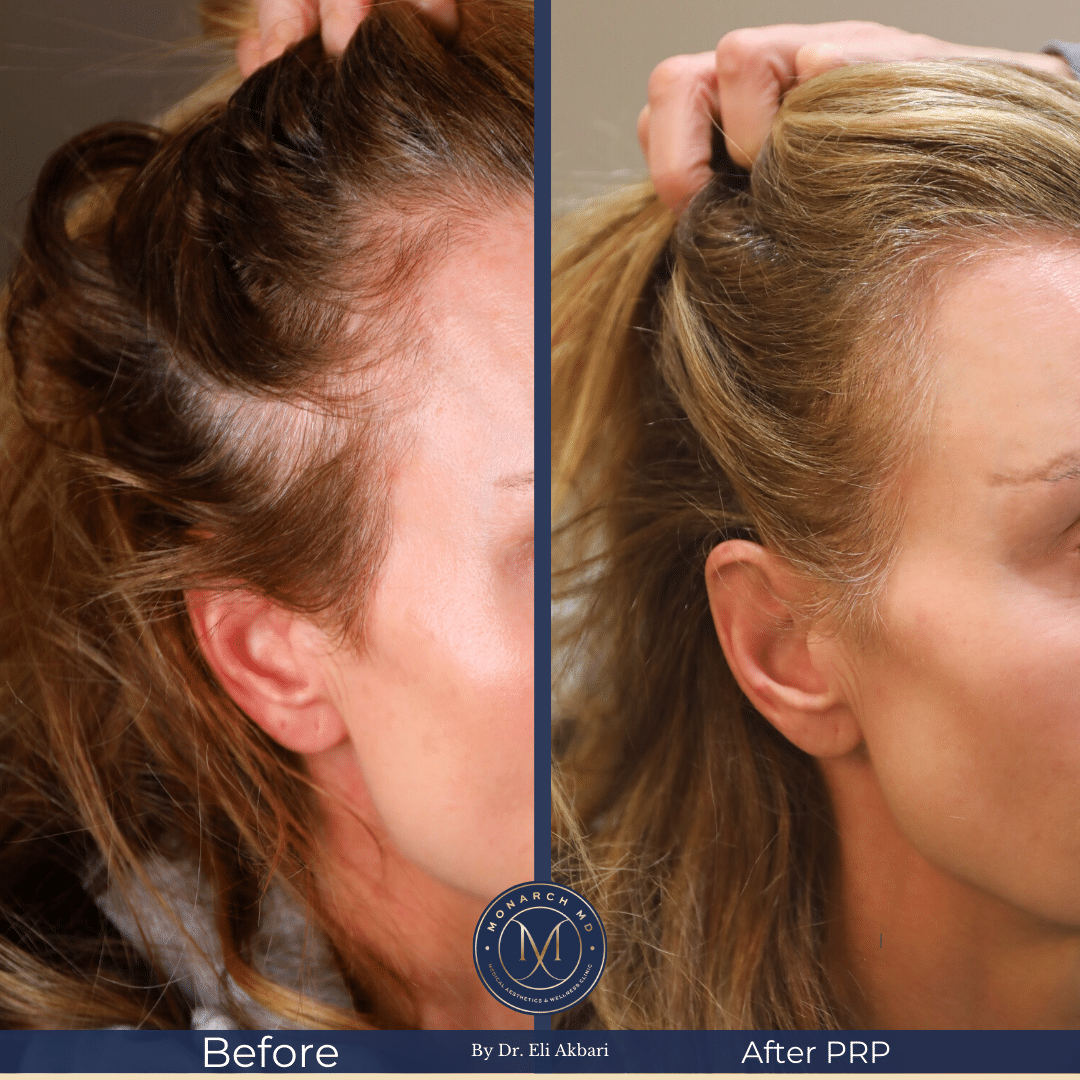
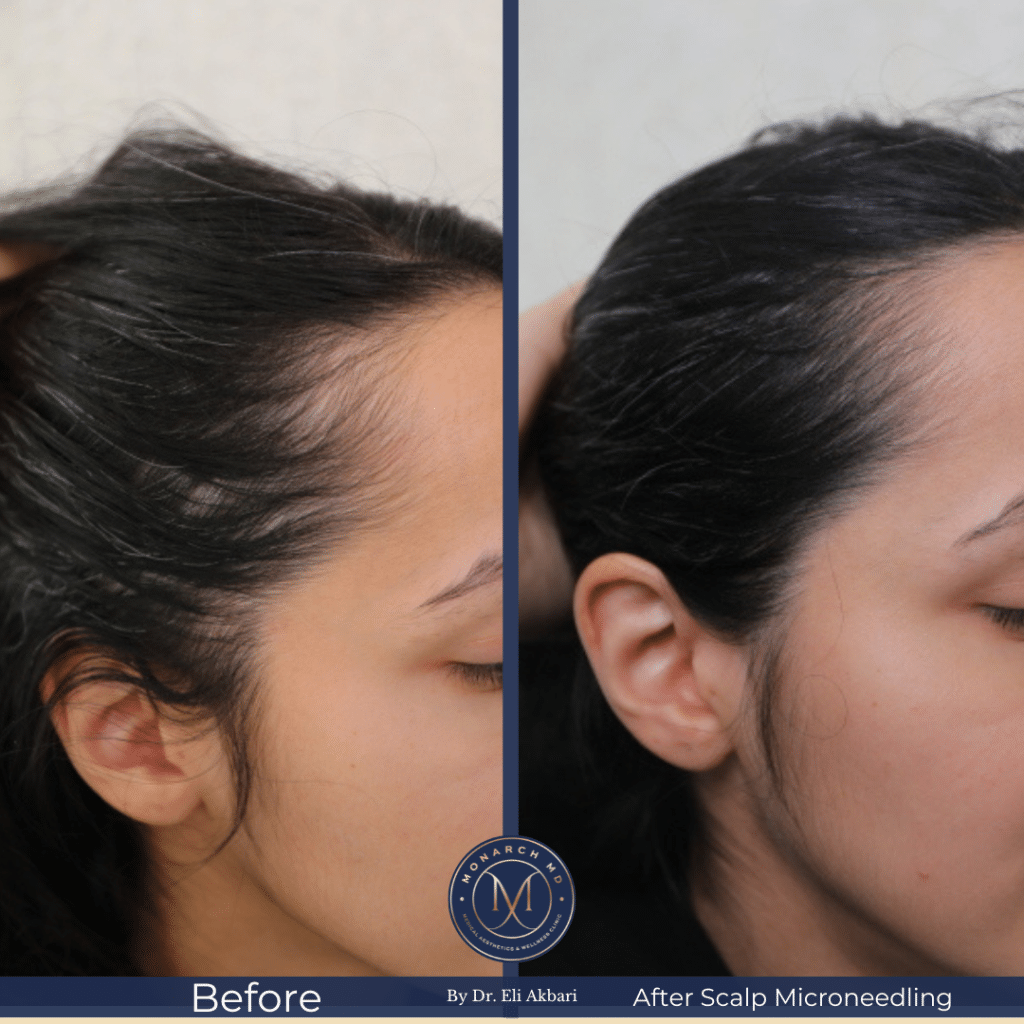
Before and after PRP: woman's thinning temple and hairline, fuller after PRP

Monarch MD patient, before and after PRP. Individual results vary.
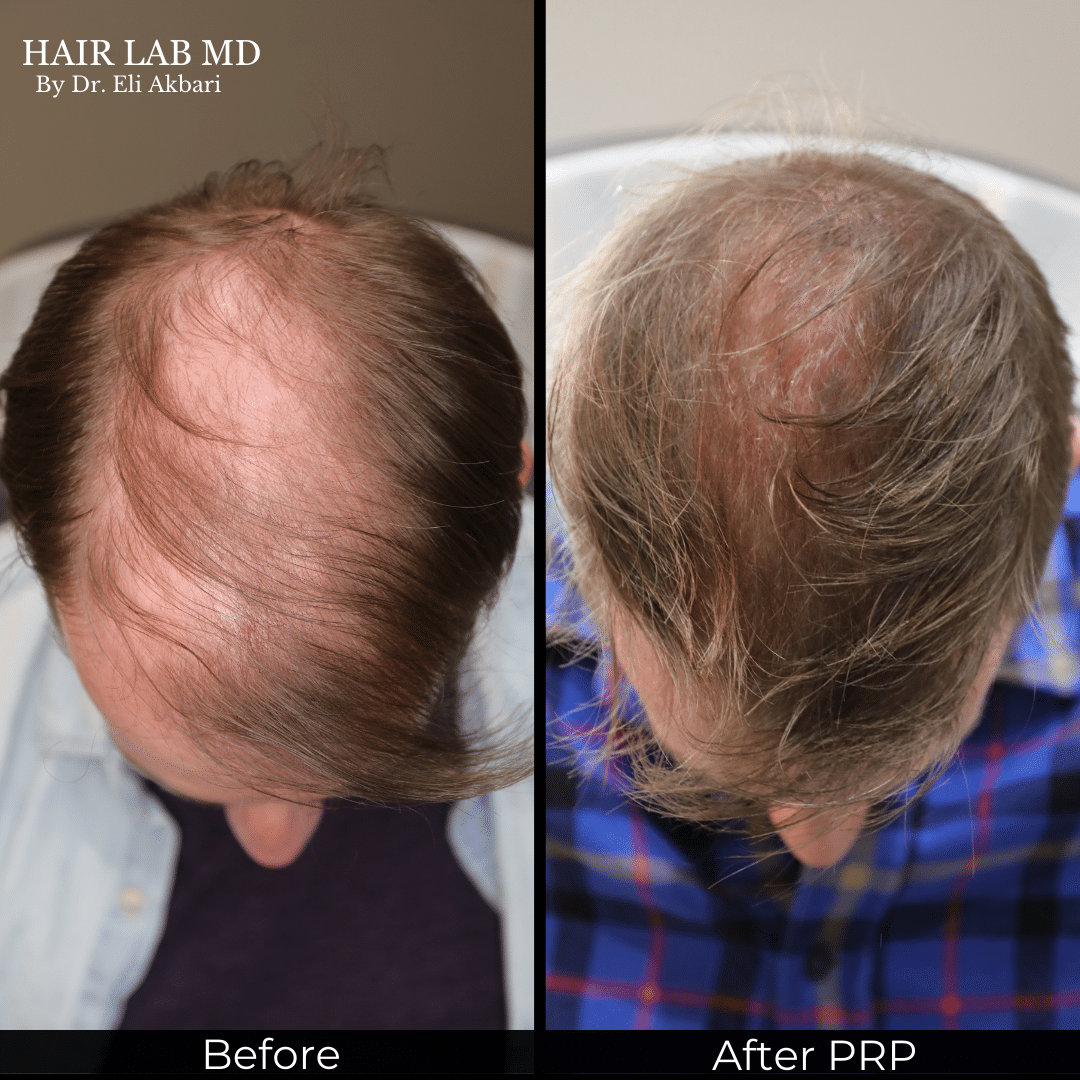
Before and after PRP: man's thinning crown seen from above, denser after PRP

Monarch MD patient, before and after PRP. Individual results vary.

Frequently asked questions

How much does PRP for hair loss cost in Vancouver?

Across the Vancouver area, a single PRP hair session generally costs between $600 and $1,400, and an initial course of three to four sessions often totals $1,800 to $3,600. Your exact price depends on your type of hair loss and the plan your physician recommends.

How much is a hair analysis at Monarch MD?

The comprehensive hair analysis is $250 + GST. It is a 60-minute, physician-led assessment that identifies the likely cause of your hair loss and ends with a personalized plan and a clear quote.

Why are Monarch MD’s prices competitive?

We perform a high volume of hair treatments every week. That volume lets us keep our pricing competitive without compromising on the quality of the PRP kit, the equipment or the time your physician spends with you.

Do I need several PRP sessions?

Most people start with a series of sessions spaced about a month apart, followed by maintenance sessions every few months. Your physician will recommend a schedule based on how active your hair loss is and how you respond.

Is PRP covered by MSP or insurance?

PRP for hair loss is considered elective and is not covered by MSP. Some extended health plans cover prescription medications used for hair loss; check with your provider.

Do you offer packages or memberships?

Yes. Treatment packages lower the per-session cost, and our Hair Lab MD membership spreads ongoing care into a monthly plan. Your physician will explain which option fits your plan.

This article is general information and is not a substitute for a personal medical assessment. Hair loss can have several causes; a qualified medical professional can help identify yours. Treatment options, suitability and pricing are confirmed after assessment.

Hair Loss Treatment in Vancouver: Your Questions Answered

Hair Loss · FAQ · West Vancouver

Hair Loss Treatment in Vancouver: Your Questions Answered

Straight answers to the questions we hear most about hair loss treatment — who it’s for, what happens at your first visit, what it costs, and how long results take.

Man showing thinning hair and a receding hairline at the front of the scalp

Thinning at the front and top of the scalp is a common early sign.

Who is hair loss treatment for?

Men and women noticing thinning, a receding hairline, a widening part or more shedding than usual. It works best when started early, while the follicles are still active. People with complete, long-standing baldness in an area may be better suited to a hair transplant, and we will tell you if that is the case.

What happens at the hair analysis?

A 60-minute appointment with the physician: a detailed history (family history, medications, stress, pregnancy, diet), a close scalp examination, a review of whether blood tests are needed (such as iron, thyroid and hormones), and a discussion of what is likely causing your hair loss. You leave with a personalized plan and a clear quote. The analysis is $250 + GST.

How much does treatment cost?

In the Vancouver area, a single PRP session generally costs $600 to $1,400, and an initial course of three to four sessions often totals $1,800 to $3,600. Our prices are competitive because we perform a high volume of hair treatments every week, but your exact price depends on your type of hair loss and the specific treatment.

What treatments do you offer?

PRP using a high-quality PRP kit and the U225 device for even delivery; exosomes; GHK-Cu copper peptide applied topically to the scalp; Fotona laser scalp therapy (HaiRestart); and medical management with evidence-backed prescription medications. Most plans combine more than one.

What PRP is

PRP (platelet-rich plasma) is made from a small sample of your own blood. Spinning the sample separates it into layers; the layer rich in platelets — which carry growth factors — is collected and placed in the scalp to support thinning follicles. We use a high-quality PRP kit and the U225 device for even, controlled delivery.

1. Small blood drawyour own blood2. Spun in a centrifugelayers separatePlasmaPlatelet-richplasma (PRP)Red blood cells3. PRP collectedrich in growth factors4. Placed in the scalpwith the U225 device

How PRP is prepared from your own blood.

Why people choose PRP

Woman checking thinning hair along her part and hairline

In women, thinning often shows first along the part and hairline.

How long until I see results?

Hair grows slowly. Many people notice less shedding within about 2 to 3 months, visible improvement in thickness around 4 to 6 months, and the full effect of a plan at around 9 to 12 months. Results vary from person to person and are not guaranteed.

Does PRP hurt?

Most people find it very tolerable. We take steps to keep you comfortable, and the U225 device delivers PRP in small, controlled amounts. The scalp may feel tender for a day or two.

Is there downtime?

Very little. Most people return to work the same or next day. We ask you not to wash your hair or use hair products for a short time after treatment.

Can I combine PRP with medication?

Yes, and combining treatments is often more effective than any single one. Your physician will explain which combination suits you and whether any medication is appropriate for your situation.

Can women be treated?

Yes. Women’s hair loss often has different causes, such as hormonal changes, iron deficiency, thyroid issues or shedding after pregnancy, so the assessment matters even more.

Where are you located?

Monarch MD is in West Vancouver and sees patients from across Metro Vancouver and the North Shore.

Real results from our clinic

Before and after PRP: woman's part line before treatment and after 2 PRP sessions, with visibly denser hair

Monarch MD patient, before and after 2 PRP sessions. Individual results vary.

Before and after hair loss treatment: man's thinning crown before, and fuller crown after

Monarch MD patient, before and after hair loss treatment. Individual results vary.

Still have questions?

The fastest way to get answers about your own hair is a proper assessment. See our pricing guide and results timeline, or book your analysis.

Book your hair analysis →

This article is general information and is not a substitute for a personal medical assessment. Hair loss can have several causes; a qualified medical professional can help identify yours. Treatment options, suitability and pricing are confirmed after assessment.
Postpartum Hair Loss: Why It Happens and When to Get Help

Hair Loss · After Pregnancy

Postpartum Hair Loss: Why It Happens and When to Get Help

A few months after having a baby, many women notice handfuls of hair in the shower or on the brush. It can be alarming. The good news: postpartum shedding is very common and usually temporary. Here is what is happening, how long it typically lasts, and when it is worth getting checked.

Woman showing thinning hair at the temple and hairline

Shedding after pregnancy is often most noticeable at the temples.

Why hair sheds after pregnancy

During pregnancy, higher hormone levels keep more hairs in the growing phase, so many women notice thicker hair. After delivery, hormone levels drop and a large number of those hairs move into the resting phase together. A few months later they shed at once. This is called telogen effluvium, and it is a reset rather than a loss of follicles.

The typical timeline

  • 2–4 months after birth: shedding begins, often most noticeable at the temples and hairline.
  • Around 4 months: shedding usually peaks.
  • 6–12 months: for most women, shedding settles and regrowth (often short “baby hairs” at the hairline) becomes visible.
Birth2–4 monthsshedding starts~4 monthsshedding peaks6–12 monthssettles, regrowthover 12 months?get assessed

Typical postpartum shedding timeline. Every pregnancy is different.

When it may be more than postpartum shedding

Consider an assessment if:

  • Heavy shedding continues more than a year after delivery.
  • Your part is widening or your scalp is more visible, rather than just more hairs falling.
  • You also feel unusually tired, cold or low, which can point to low iron or a thyroid problem — both common after pregnancy.
  • Hair loss runs in your family. Pregnancy can unmask female pattern hair loss, which does not recover on its own.

What helps

  • Check the basics: ferritin (iron stores), thyroid function and vitamin D are worth reviewing with a physician.
  • Be gentle with your hair: avoid tight styles and harsh heat while it recovers.
  • Treat what does not recover: if thinning persists, options such as PRP, Fotona laser scalp therapy and topical GHK-Cu copper peptide can support regrowth. Some medications are not suitable while breastfeeding, so your plan should be tailored to you.

Not sure whether it is shedding or thinning? Read Why is my hair shedding? or book an assessment.

Book a hair analysis →

Real results from our clinic

Before and after: woman's thinning hairline at the temple before, and fuller hairline after treatment

Monarch MD patient, before and after treatment of a thinning hairline. Individual results vary.

Frequently asked questions

When does postpartum hair loss start?

Usually about 2 to 4 months after giving birth, often peaking around the fourth month.

How long does postpartum shedding last?

For most women it settles within 6 to 12 months of delivery. If shedding continues beyond a year, or the hair is clearly thinner rather than just shedding, it is worth an assessment.

Is postpartum hair loss permanent?

Usually not. Postpartum shedding is typically temporary, but pregnancy can also reveal or speed up genetic thinning, which does not recover on its own.

Can I get treatment while breastfeeding?

Some treatments are not suitable while breastfeeding, including several hair loss medications. Your physician will recommend options that are appropriate for you.

This article is general information and is not a substitute for a personal medical assessment. Hair loss can have several causes; a qualified medical professional can help identify yours. Treatment options, suitability and pricing are confirmed after assessment.

PRP vs. Hair Transplant: Which One Do You Actually Need?

Hair Loss · Comparing Options

PRP vs. Hair Transplant: Which One Do You Actually Need?

If you are researching hair loss, you have probably weighed PRP against a hair transplant. They are often presented as alternatives, but they solve different problems. Choosing well starts with understanding what each one does.

The short answer

  • PRP supports follicles that are thinning but still alive, and can help slow ongoing loss.
  • A hair transplant moves follicles from the back of the head into areas that are already bald.

A transplant does not stop the rest of your hair from thinning. That is why many transplant surgeons recommend medical treatment and PRP alongside surgery.

What PRP is

PRP (platelet-rich plasma) is made from a small sample of your own blood. Spinning the sample separates it into layers; the layer rich in platelets — which carry growth factors — is collected and placed in the scalp to support thinning follicles. We use a high-quality PRP kit and the U225 device for even, controlled delivery.

1. Small blood drawyour own blood2. Spun in a centrifugelayers separatePlasmaPlatelet-richplasma (PRP)Red blood cells3. PRP collectedrich in growth factors4. Placed in the scalpwith the U225 device

How PRP is prepared from your own blood.

Why people choose PRP

Man showing thinning hair and a receding hairline at the front of the scalp

Thinning at the front and top of the scalp is a common early sign.

Side by side

  • Best for: PRP — early to moderate thinning, a widening part, diffuse thinning. Transplant — stable, well-defined bald areas with a good donor area.
  • Procedure: PRP — a short in-clinic treatment using your own blood. Transplant — surgery lasting several hours.
  • Downtime: PRP — minimal, usually back to normal the same or next day. Transplant — typically one to two weeks of visible healing.
  • Typical Vancouver cost: PRP — about $600–$1,400 per session, often $1,800–$3,600 for an initial course. Transplant — commonly $8,000–$20,000+.
  • Timeline: both take months; visible change usually builds over 6–12 months.

Why treating early matters

The more active follicles you still have, the more non-surgical treatment can do. Starting early with PRP and evidence-backed medication can protect the hair you have, and for some people delay or avoid the need for surgery.

How we approach PRP at Monarch MD

  • A high-quality, medical-grade PRP kit for consistent platelet concentration.
  • The U225 device to deliver PRP in small, even, precisely controlled amounts across the scalp.
  • Combination options when they fit your plan: exosomes, topical GHK-Cu copper peptide, Fotona laser scalp therapy, and medical management with evidence-backed prescription medications.

If your assessment shows a transplant would serve you better, we will tell you. See PRP pricing in Vancouver or compare PRP with other treatments.

Find out which option fits you →

Real results from our clinic

Before and after PRP: woman's part line before treatment and after 2 PRP sessions, with visibly denser hair

Monarch MD patient, before and after 2 PRP sessions. Individual results vary.

Before and after hair loss treatment: man's thinning crown before, and fuller crown after

Monarch MD patient, before and after hair loss treatment. Individual results vary.

Frequently asked questions

Is PRP better than a hair transplant?

They do different jobs. PRP supports existing, thinning follicles and can help slow ongoing loss. A transplant moves follicles into areas that are already bald. Many people need one, the other, or both.

How much does a hair transplant cost in Vancouver?

Hair transplants in the Vancouver area commonly cost from about $8,000 to $20,000 or more, depending on the number of grafts and the technique. PRP generally costs $600 to $1,400 per session.

Can PRP replace a hair transplant?

Not for areas that are already completely bald. PRP cannot create new follicles. For thinning areas where follicles are still active, PRP and medical treatment may make a transplant unnecessary or delay the need for one.

Can PRP be used after a hair transplant?

Yes. PRP is often used alongside a transplant to support the surrounding native hair, which a transplant does not protect from ongoing loss.

This article is general information and is not a substitute for a personal medical assessment. Hair loss can have several causes; a qualified medical professional can help identify yours. Treatment options, suitability and pricing are confirmed after assessment.
Receding Hairline in Your 20s: What It Means and What to Do

Hair Loss · Men in Their 20s

Receding Hairline in Your 20s: What It Means and What to Do

Noticing your temples creeping back in your twenties can be unsettling. Sometimes it is a normal maturing hairline; sometimes it is the start of genetic hair loss. The difference matters, because early is when treatment does the most.

Man showing thinning hair and a receding hairline at the front of the scalp

Thinning at the front and top of the scalp is a common early sign.

Maturing hairline or early hair loss?

Most men’s hairlines move back slightly in their late teens and twenties. A maturing hairline typically:

  • moves back a small, even amount across the front,
  • then stays stable, and
  • comes with no thinning at the crown.

Early androgenetic (genetic) hair loss is more likely if:

  • the temples keep receding into a deeper “M” shape,
  • hair at the front or crown looks finer and see-through,
  • you are shedding more than usual, or
  • close relatives on either side of your family lost their hair.
Chart of male pattern hair loss stages, from a slightly receded hairline to advanced loss at the crown and front

Male pattern hair loss usually progresses in recognizable stages.

Why it happens: DHT

In genetic hair loss, follicles are sensitive to DHT, a hormone made from testosterone. Over time DHT shrinks those follicles, so each new hair grows back thinner and shorter until the follicle stops producing visible hair. Read more about DHT and hair loss.

Why your 20s are the best time to act

Treatment is far more effective at keeping and strengthening follicles that are still active than at reviving ones that are long gone. Starting early usually means a simpler plan, a lower long-term cost and better results.

Your options

  • Medical management — evidence-backed prescription medications, such as DHT blockers and minoxidil, prescribed after a physician assessment. Finasteride vs. dutasteride.
  • PRP — your own concentrated platelets, prepared with a high-quality PRP kit and delivered evenly with the U225 device.
  • Exosomes — a newer regenerative treatment applied to the scalp.
  • GHK-Cu copper peptide — applied topically to the scalp.
  • Fotona laser scalp therapy — a gentle, non-invasive laser treatment.

Many plans combine treatments. Wondering about cost? See hair loss treatment prices in Vancouver.

Get your hairline assessed →

Real results from our clinic

Before and after: man's receding hairline at the temple before, and fuller hairline after PRP

Monarch MD patient, before and after PRP. Individual results vary.

Before and after hair loss treatment: man's thinning crown before, and fuller crown after

Monarch MD patient, before and after hair loss treatment. Individual results vary.

Frequently asked questions

Is a receding hairline in your 20s normal?

A small change, often called a maturing hairline, is normal as adolescence ends. Steady recession at the temples, thinning at the crown, or a family history of baldness more often points to genetic hair loss, which tends to progress without treatment.

Can a receding hairline grow back?

Follicles that are thinning but still active can often be strengthened, and some regrowth is possible. Areas that have been completely bald for a long time usually do not regrow with non-surgical treatment, which is why starting early matters.

What is the best treatment for a receding hairline?

There is no single best treatment. Evidence-backed options include DHT-blocking medication, minoxidil, PRP and laser scalp therapy, and they are often combined. The right plan depends on your pattern, your goals and your health, and is decided with a physician.

Do DHT blockers have side effects?

Medications such as finasteride can have side effects in a small proportion of people. Your physician will go through the benefits and risks with you so you can make an informed choice. Non-medication options are also available.

This article is general information and is not a substitute for a personal medical assessment. Hair loss can have several causes; a qualified medical professional can help identify yours. Treatment options, suitability and pricing are confirmed after assessment.