
Alopecia areata treatment in Vancouver
A smooth, round bald patch that appears almost overnight is frightening. Alopecia areata is an autoimmune condition — and because it behaves differently from other hair loss, it needs a proper medical diagnosis before any treatment.
- 8 years of hair care
- Thousands of patients treated
- Diagnosed by a medical doctor

When the immune system targets hair follicles
In alopecia areata, the immune system attacks the hair follicle, pushing it into a resting state. The follicle isn't destroyed, which is why hair can regrow. It most often appears as one or more round, smooth patches on the scalp or in the beard, and can sometimes affect the eyebrows, eyelashes or nails.
It can start at any age and is more likely in people with a personal or family history of autoimmune conditions such as thyroid disease, or of eczema and allergies. Its course is unpredictable: some patches regrow on their own, others spread or return.
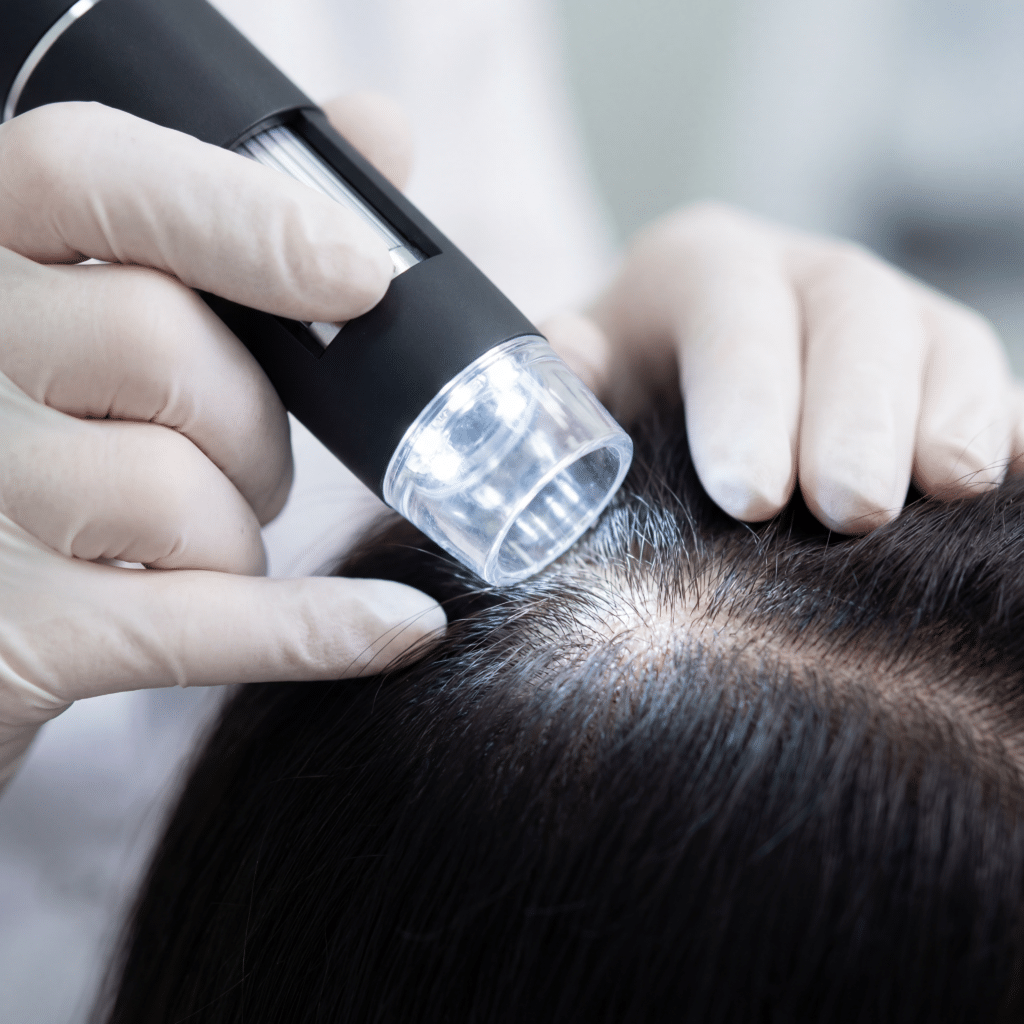
Confirming it's alopecia areata
Patchy hair loss isn't always alopecia areata. Fungal infection, hair pulling (trichotillomania), traction and scarring alopecias can look similar — and need completely different treatment.
- Trichoscopy signs typical of alopecia areata, such as exclamation-mark hairs and yellow dots
- Signs that point to another cause, such as scarring or infection
- Thyroid function and other bloodwork linked to autoimmune hair loss
- How active the patches are and how much area is involved
- Nail changes and beard or eyebrow involvement
60 minutes with a doctor
One of the most comprehensive hair analyses in Metro Vancouver — performed and led by a medical doctor, one-on-one and in private. $250 + GST.
- Medical history. Your health, family history, medications and what you've already tried.
- Live HD trichoscopy. A magnified, on-screen look at your scalp and follicles.
- Detailed scalp examination. Inflammation, oil, irritation and overall scalp health.
- Blood test of over 40 biomarkers. Hormones, thyroid, iron, nutrition and more.
- Your recommendations and plan. Shampoo, medical therapy, natural DHT-blocker options and in-clinic treatments — plus a detailed report with your images.
Treating alopecia areata
The right treatment depends on how many patches you have, how active they are and how long they've been present. Standard medical options include corticosteroids applied to or injected into the patches, and newer oral medications for extensive disease. We explain the evidence for each option honestly, including when a dermatologist referral is the right next step.
Some of our treatments, such as PRP, have been studied in alopecia areata, but they are not right for every patient. Treatment for AA is decided case by case after your analysis — never as a package.
Living with alopecia areata
Many small patches regrow within a year, and new hair can come back white or fine at first before its colour returns. Because AA can come and go, we track your scalp with photos and trichoscopy so changes are caught early.
You'll receive a detailed report with your images after the analysis, so you know exactly what was found and what the plan is.
Related guides

Every plan is overseen by Dr. Eli Akbari
Dr. Eli Akbari, MD, FRCSC is a double board-certified facial plastic surgeon (RCPSC and AAFPRS) trained at the University of British Columbia and the University of Toronto. Our hair program has been established for the past 8 years, and we have treated thousands of patients across Metro Vancouver.
- A scientific, evidence-based approach — treatment chosen from your test results
- A detailed report with your scalp and trichoscopy images
- Rated 4.9 from 495 Google reviews
Alopecia areata questions
Will my hair grow back with alopecia areata?
Often, yes. The follicles aren't destroyed, so regrowth is possible — many small patches regrow within a year. The course is unpredictable, which is why a medical diagnosis and follow-up matter.
Is alopecia areata caused by stress?
Alopecia areata is autoimmune. Stress may act as a trigger in some people, but it isn't the underlying cause.
Can PRP help alopecia areata?
PRP has been studied in alopecia areata with encouraging results in some patients, but it isn't first-line for everyone. The doctor will tell you whether it makes sense for your case.
Do you treat beard or eyebrow alopecia areata?
We assess alopecia areata wherever it appears, including the beard and eyebrows, and explain the options for each area.
How do I get assessed?
Book a hair analysis: 60 minutes with a doctor, including trichoscopy, a scalp exam, a blood test of over 40 biomarkers and a detailed report with images. $250 + GST.
Find out what's causing your hair loss
One private hour with a doctor, a magnified look at your scalp, a 40+ biomarker blood test and a clear plan — with a detailed report and images after your visit.
Request a hair analysis$250 + GST · Only a few spots left this weekPrefer to call? 604-912-0600