
PRP vs. Hair Transplant: Which One Do You Actually Need?
If you are researching hair loss, you have probably weighed PRP against a hair transplant. They are often presented as alternatives, but they solve different problems. Choosing well starts with understanding what each one does.
The short answer
- PRP supports follicles that are thinning but still alive, and can help slow ongoing loss.
- A hair transplant moves follicles from the back of the head into areas that are already bald.
A transplant does not stop the rest of your hair from thinning. That is why many transplant surgeons recommend medical treatment and PRP alongside surgery.
What PRP is
PRP (platelet-rich plasma) is made from a small sample of your own blood. Spinning the sample separates it into layers; the layer rich in platelets — which carry growth factors — is collected and placed in the scalp to support thinning follicles. We use a high-quality PRP kit and the U225 device for even, controlled delivery.
How PRP is prepared from your own blood.
Why people choose PRP

Thinning at the front and top of the scalp is a common early sign.
Side by side
- Best for: PRP — early to moderate thinning, a widening part, diffuse thinning. Transplant — stable, well-defined bald areas with a good donor area.
- Procedure: PRP — a short in-clinic treatment using your own blood. Transplant — surgery lasting several hours.
- Downtime: PRP — minimal, usually back to normal the same or next day. Transplant — typically one to two weeks of visible healing.
- Typical Vancouver cost: PRP — about $600–$1,400 per session, often $1,800–$3,600 for an initial course. Transplant — commonly $8,000–$20,000+.
- Timeline: both take months; visible change usually builds over 6–12 months.
Why treating early matters
The more active follicles you still have, the more non-surgical treatment can do. Starting early with PRP and evidence-backed medication can protect the hair you have, and for some people delay or avoid the need for surgery.
How we approach PRP at Monarch MD
- A high-quality, medical-grade PRP kit for consistent platelet concentration.
- The U225 device to deliver PRP in small, even, precisely controlled amounts across the scalp.
- Combination options when they fit your plan: exosomes, topical GHK-Cu copper peptide, Fotona laser scalp therapy, and medical management with evidence-backed prescription medications.
If your assessment shows a transplant would serve you better, we will tell you. See PRP pricing in Vancouver or compare PRP with other treatments.
Find out which option fits you →
Real results from our clinic
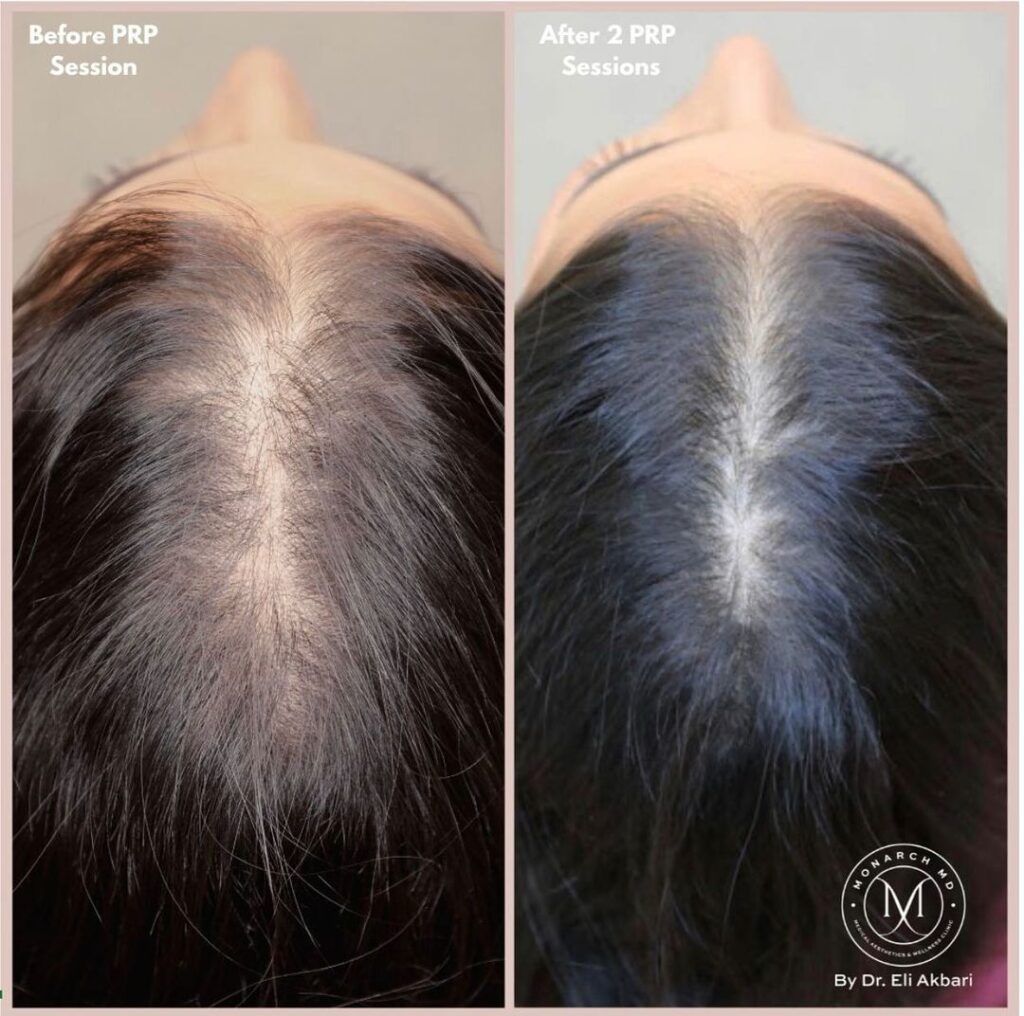
Monarch MD patient, before and after 2 PRP sessions. Individual results vary.
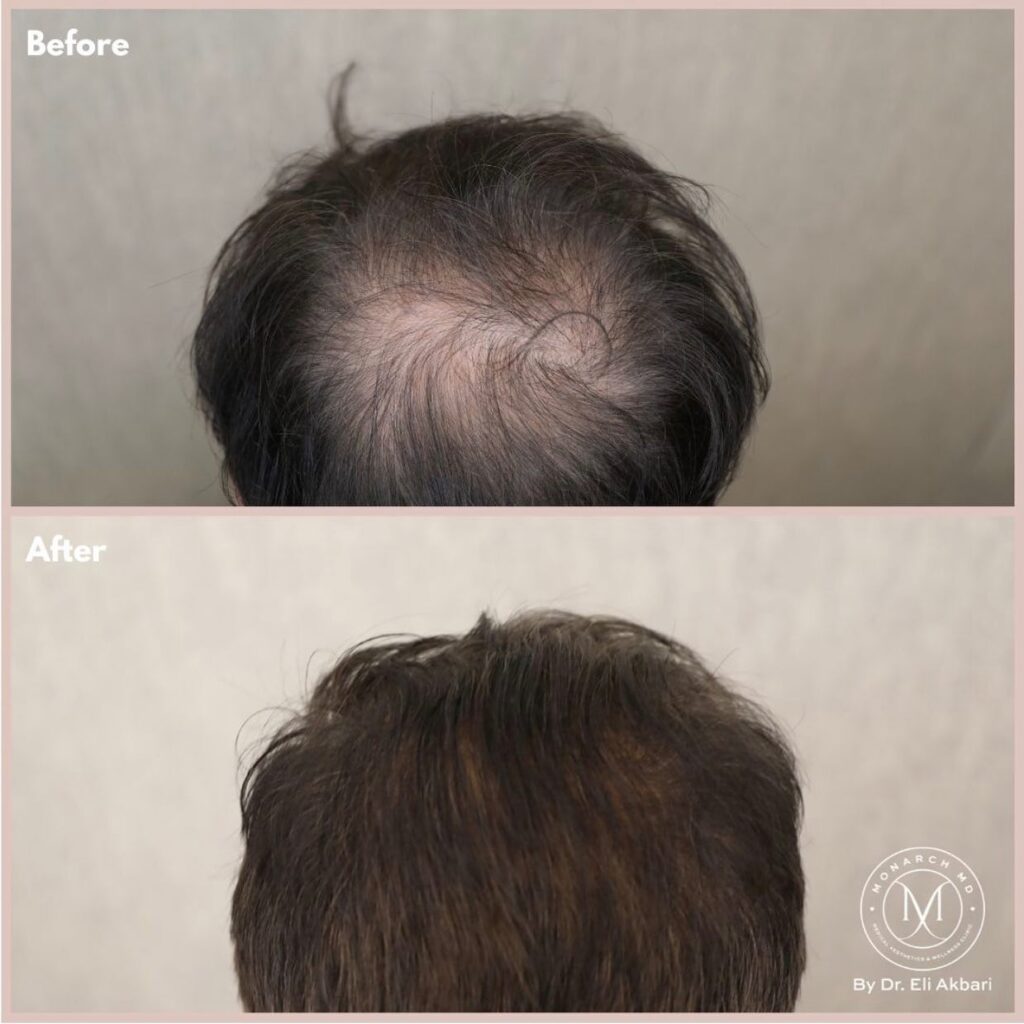
Monarch MD patient, before and after hair loss treatment. Individual results vary.
Frequently asked questions
Is PRP better than a hair transplant?
They do different jobs. PRP supports existing, thinning follicles and can help slow ongoing loss. A transplant moves follicles into areas that are already bald. Many people need one, the other, or both.
How much does a hair transplant cost in Vancouver?
Hair transplants in the Vancouver area commonly cost from about $8,000 to $20,000 or more, depending on the number of grafts and the technique. PRP generally costs $600 to $1,400 per session.
Can PRP replace a hair transplant?
Not for areas that are already completely bald. PRP cannot create new follicles. For thinning areas where follicles are still active, PRP and medical treatment may make a transplant unnecessary or delay the need for one.
Can PRP be used after a hair transplant?
Yes. PRP is often used alongside a transplant to support the surrounding native hair, which a transplant does not protect from ongoing loss.
This article is general information and is not a substitute for a personal medical assessment. Hair loss can have several causes; a qualified medical professional can help identify yours. Treatment options, suitability and pricing are confirmed after assessment.

No comment yet, add your voice below!