
The science of
PRP and
microneedling.
Two gentle in-clinic treatments that help wake up sleepy hair follicles. Here’s how they work and what the research shows.
Waking up
sleepy follicles.
Not every thinning follicle is gone — many are just tired. In pattern hair loss, follicles spend less time growing and more time resting. PRP and microneedling are designed to give those follicles a nudge back into the growth phase.
They’re a lovely fit if you like the idea of using your body’s own healing response, and they’re often combined with medications like minoxidil or finasteride for a fuller plan.
From resting
to growing.
Both treatments aim to move resting follicles back into the growth phase and support the cells at the base of the follicle that direct growth. Results build gradually, because hair grows in cycles.
How PRP works.
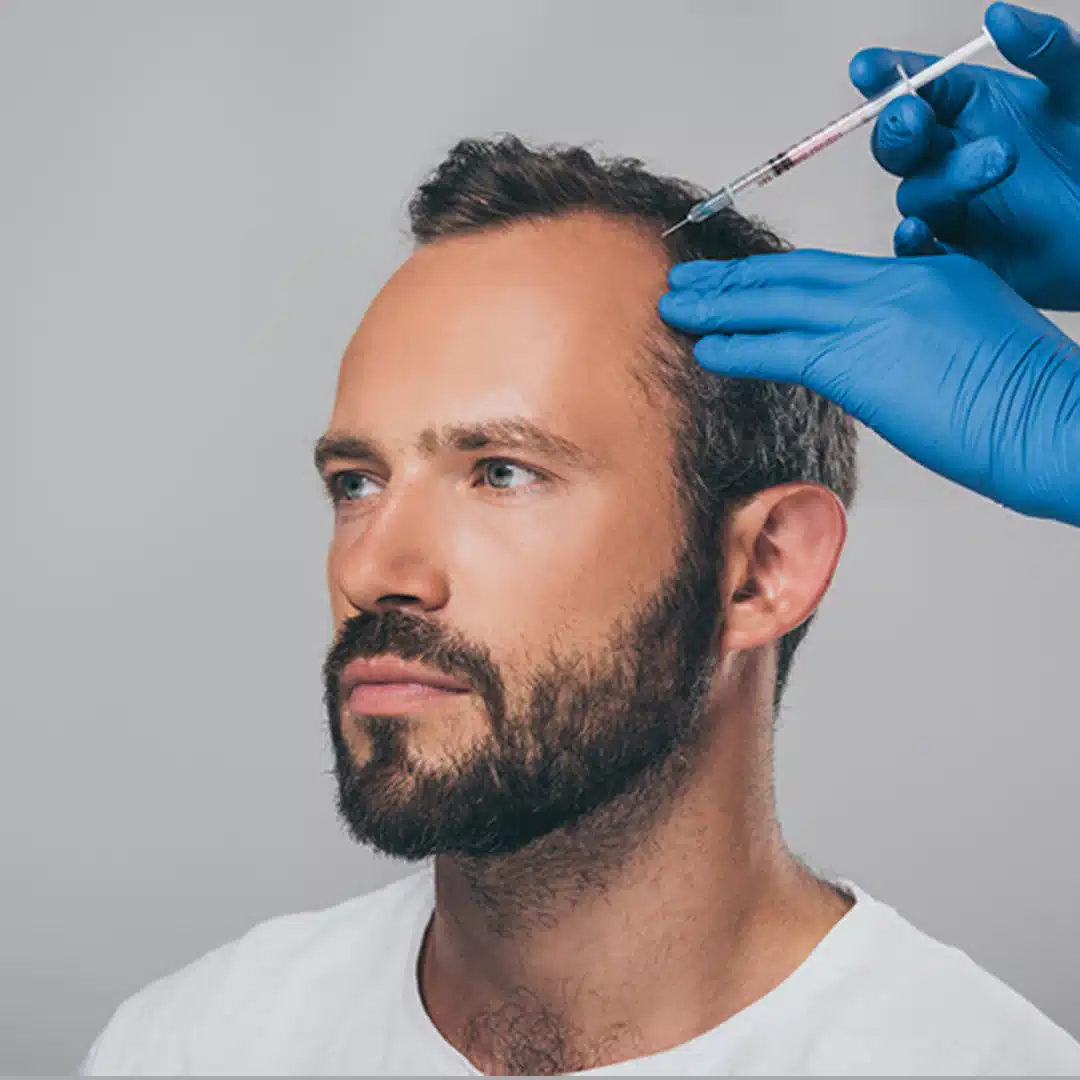
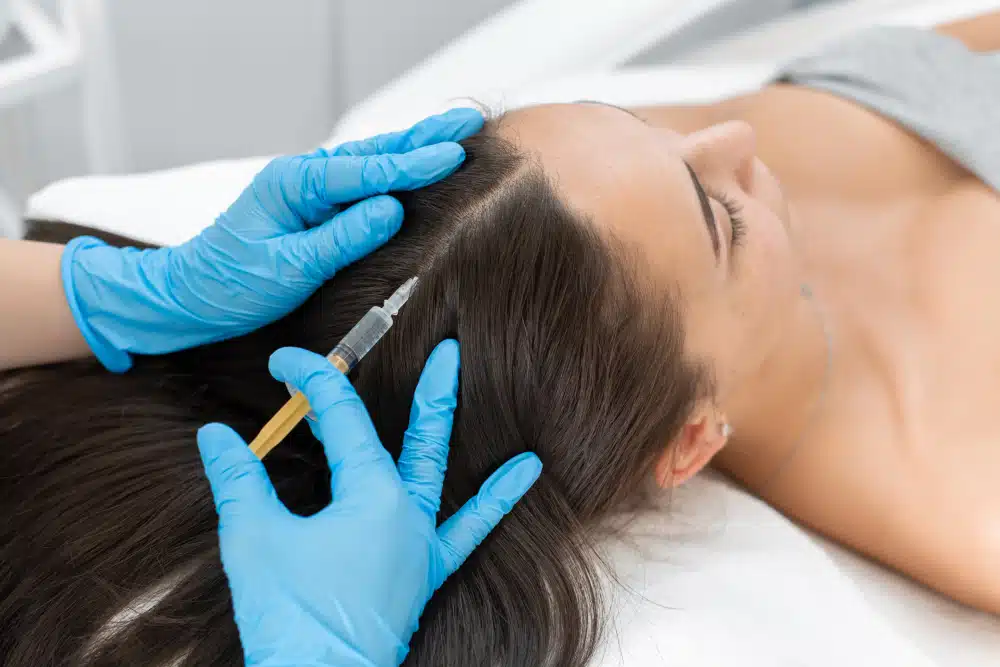
PRP stands for platelet-rich plasma. We take a small sample of your own blood, spin it to concentrate the platelets — tiny cells rich in natural growth factors — and gently place that plasma into the scalp.
In lab studies, activated PRP boosted the growth of the cells that direct hair growth at the base of the follicle and speeded the shift from resting to growing in mice. That’s the “why” behind PRP; the human trials below show what happens in real people.
How microneedling works.
Microneedling uses very fine sterile needles to create tiny, controlled channels in the scalp. That triggers your skin’s natural healing response, and the channels can help products applied afterward reach deeper.
In a well-known study in adult mice, wounding the skin led to new follicles that grew normally, which helps explain why microneedling is studied for hair.
The studies, in plain English.
Microneedling
teamwork.
Two randomized trials found the same thing: adding microneedling to minoxidil gave better results than minoxidil alone. Hair count and density are different measures, so the two charts below aren’t directly comparable — but the direction is encouraging.
Realistic, and
encouraging.
PRP and microneedling work best on follicles that are thinning but still present — so earlier is better.
See how PRP
works.
A clear, well-made explainer from a facial plastic surgeon, if you’d like to see the process. It opens on YouTube.
Your questions,
answered.
PRP uses your own blood, and in a review of 11 randomized trials the side effects were mild and temporary — things like pain, itching or minor bleeding. We’ll check that it’s a good fit for you first.
Most people describe a light prickling sensation, and numbing is available if you’re more sensitive. Redness usually settles in 24–48 hours.
It depends on your pattern of loss and how you respond. Studies use different schedules, so there’s no single standard. Dr. Akbari sets your plan with you.
Hair grows in cycles, so results build gradually — many people notice early changes after a few months, with the clearest picture later.
Yes. In trials, microneedling plus minoxidil beat minoxidil alone, and PRP added to minoxidil improved density over minoxidil by itself.
They work on follicles that are thinning but still present. Where follicles have completely closed, they can’t be revived — one more reason to start early.
- Giordano S, et al. J Cosmet Dermatol, 2017 — meta-analysis of PRP for androgenetic alopecia (6 studies, 177 patients). PubMed
- Papakonstantinou M, et al. Plast Reconstr Surg, 2023 — meta-analysis of 11 randomized trials of PRP. PubMed
- Zhang X, et al. J Cutan Med Surg, 2023 — meta-analysis of 9 randomized trials of PRP (238 patients). PubMed
- Kieling L, et al. An Bras Dermatol, 2024 — meta-analysis of 14 randomized trials of PRP (431 patients). PubMed
- Gentile P, et al. Stem Cells Transl Med, 2015 — half-head randomized trial of PRP. PubMed
- Li ZJ, et al. Dermatol Surg, 2012 — effects of activated PRP on dermal papilla cells and mice. PubMed
- Ito M, et al. Nature, 2007 — wound-induced hair follicle regeneration in mice. PubMed
- Dhurat R, et al. Int J Trichology, 2013 — pilot randomized trial of microneedling plus minoxidil in 100 men. PubMed
- Bao L, et al. J Cosmet Laser Ther, 2020 — randomized trial of microneedling, minoxidil and both in 60 men. PubMed
- Fertig RM, et al. J Eur Acad Dermatol Venereol, 2018 — review of microneedling for hair loss. PubMed
- Pei D, et al. J Cosmet Dermatol, 2024 — meta-analysis of combined microneedling therapy (13 randomized trials). PubMed
- Ahmed KMA, et al. Arch Dermatol Res, 2025 — meta-analysis of combined microneedling therapy (12 randomized trials, 631 patients). PubMed
- Xiao C, et al. Aesthetic Plast Surg, 2024 — meta-analysis of PRP plus minoxidil (6 randomized trials). PubMed
- Yao J, et al. PLoS One, 2024 — meta-analysis of PRP added to topical minoxidil. PubMed
- Nilforoushzadeh MA, et al. J Cosmet Dermatol, 2025 — randomized comparison of PRP injection and microneedling in 40 patients. PubMed
- Lu P, et al. J Cosmet Laser Ther, 2025 — split-scalp comparison of microneedle-delivered vs injected PRP. PubMed
Check pricing.
If it’s urgent, call us at (604) 912-0600.
Curious if it’s
right for you?
Start with a friendly assessment, and we’ll map out what makes sense for your hair.
This page is general information based on published research and is not medical advice. Results vary, and suitability for PRP or microneedling should be assessed by a qualified physician.
