
Telogen effluvium treatment in Vancouver
Handfuls of hair in the shower, on your pillow or in your brush? Telogen effluvium is one of the most common causes of hair loss we see. The key is finding the trigger — and making sure it isn't hiding another type of hair loss.
- 8 years of hair care
- Thousands of patients treated
- Trigger found with 40+ biomarkers

Why hair suddenly starts shedding
Normally, around 10–15% of your hairs are in the resting (telogen) phase at any time. After a shock to the body, many more follicles can switch into that resting phase at once — and about two to four months later, those hairs fall out together. That's telogen effluvium.
Common triggers include illness or high fever, surgery, childbirth, rapid weight loss (including GLP-1 medications), crash dieting, low iron or other nutritional gaps, thyroid problems, new medications and major stress. When shedding lasts longer than about six months, it's called chronic telogen effluvium.
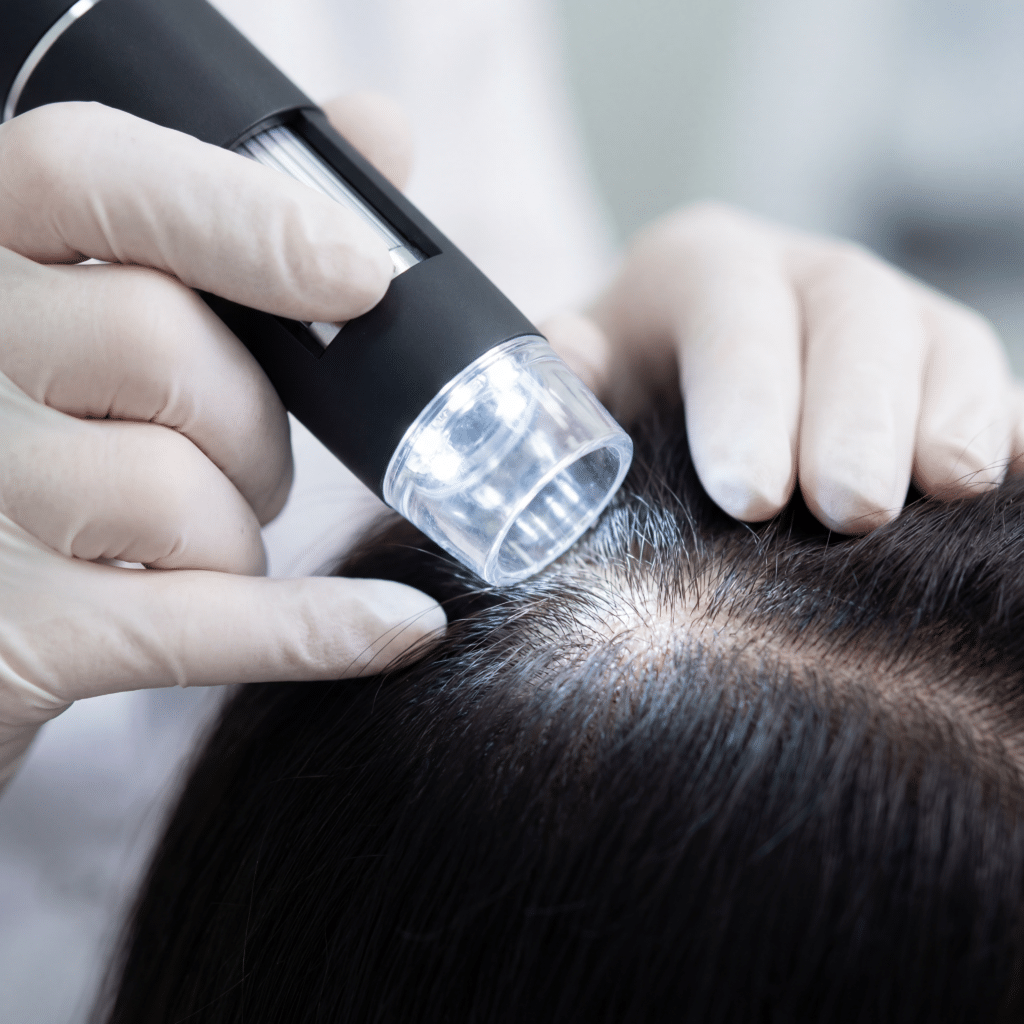
Finding the trigger
Telogen effluvium is diagnosed by ruling things in and out — not by looking at hair in a drain. During your analysis we check whether this is pure shedding, or shedding that has "unmasked" pattern hair loss underneath, which needs different treatment.
- Timing — what happened two to four months before the shedding started
- Iron stores, thyroid, vitamin D, B12 and other nutrition markers in your bloodwork
- Trichoscopy signs that separate shedding from miniaturizing (pattern) hair loss
- Medications, diet and weight changes
- Scalp inflammation that can make shedding worse
60 minutes with a doctor
One of the most comprehensive hair analyses in Metro Vancouver — performed and led by a medical doctor, one-on-one and in private. $250 + GST.
- Medical history. Your health, family history, medications and what you've already tried.
- Live HD trichoscopy. A magnified, on-screen look at your scalp and follicles.
- Detailed scalp examination. Inflammation, oil, irritation and overall scalp health.
- Blood test of over 40 biomarkers. Hormones, thyroid, iron, nutrition and more.
- Your recommendations and plan. Shampoo, medical therapy, natural DHT-blocker options and in-clinic treatments — plus a detailed report with your images.
Treating telogen effluvium
The first treatment is correcting the trigger — for example replacing low iron or treating a thyroid problem. Once the cause is addressed, many patients also want to speed up and strengthen regrowth.
Prescription DHT blockers are usually only needed when pattern hair loss is found alongside the shedding. Your doctor will explain which options fit your results.
How long until it stops?
Acute telogen effluvium often settles within a few months once the trigger is gone, and regrowth then takes several more months to become visible because hair grows about a centimetre a month. Chronic shedding takes longer and is where a full workup matters most.
In our patients, shedding typically slows within 4–8 weeks of starting a plan, with density improving from around months 3–4.
Related guides

Every plan is overseen by Dr. Eli Akbari
Dr. Eli Akbari, MD, FRCSC is a double board-certified facial plastic surgeon (RCPSC and AAFPRS) trained at the University of British Columbia and the University of Toronto. Our hair program has been established for the past 8 years, and we have treated thousands of patients across Metro Vancouver.
- A scientific, evidence-based approach — treatment chosen from your test results
- A detailed report with your scalp and trichoscopy images
- Rated 4.9 from 495 Google reviews
Telogen effluvium questions
Will hair from telogen effluvium grow back?
In most cases, yes — telogen effluvium doesn't destroy the follicle. Once the trigger is corrected, hair usually regrows, although it can take several months to see the difference.
How do I know it's telogen effluvium and not balding?
They can look similar, and they can happen together. Trichoscopy shows whether hairs are miniaturizing (a sign of pattern hair loss) and bloodwork helps find a trigger. That's why our hair analysis includes both.
Can Ozempic or weight loss cause hair shedding?
Rapid weight loss, including with GLP-1 medications, is a recognised trigger for telogen effluvium. We check nutrition markers and build a plan to support regrowth.
What blood tests are done for hair shedding?
Our blood test covers over 40 biomarkers, including iron stores, thyroid function, vitamins and hormones. The doctor chooses the panel from your history.
How much does the assessment cost?
The hair analysis is $250 + GST. It is not free. It takes 60 minutes with a doctor and includes trichoscopy, a scalp exam, the blood test and a detailed report with images.
Find out what's causing your hair loss
One private hour with a doctor, a magnified look at your scalp, a 40+ biomarker blood test and a clear plan — with a detailed report and images after your visit.
Request a hair analysis$250 + GST · Only a few spots left this weekPrefer to call? 604-912-0600