
Botox 101: Everything
You Need to Know
Units, areas, longevity, cost, side effects — the definitive guide to Botox in Vancouver, written by a Double Board Certified Facial Plastic Surgeon.

Botox is the world's most popular cosmetic treatment — and also one of the most misunderstood. People either underestimate what it can do, dismiss it as something that makes faces look frozen and expressionless, or have no idea where to start when it comes to finding a qualified injector and understanding what a good result actually looks like.
If you are ready to explore treatment options, learn more about our Botox clinic in West Vancouver or continue reading to understand how the science works. This guide covers everything: the science behind how Botox works, every area of the face and neck it can treat, how many units you actually need, how long it genuinely lasts, what it costs in Vancouver, the difference between Botox and filler, and — perhaps most importantly — how to evaluate injectors and avoid the practitioners who are giving this treatment its bad reputation.
What Is Botox —
and How Does It Work?
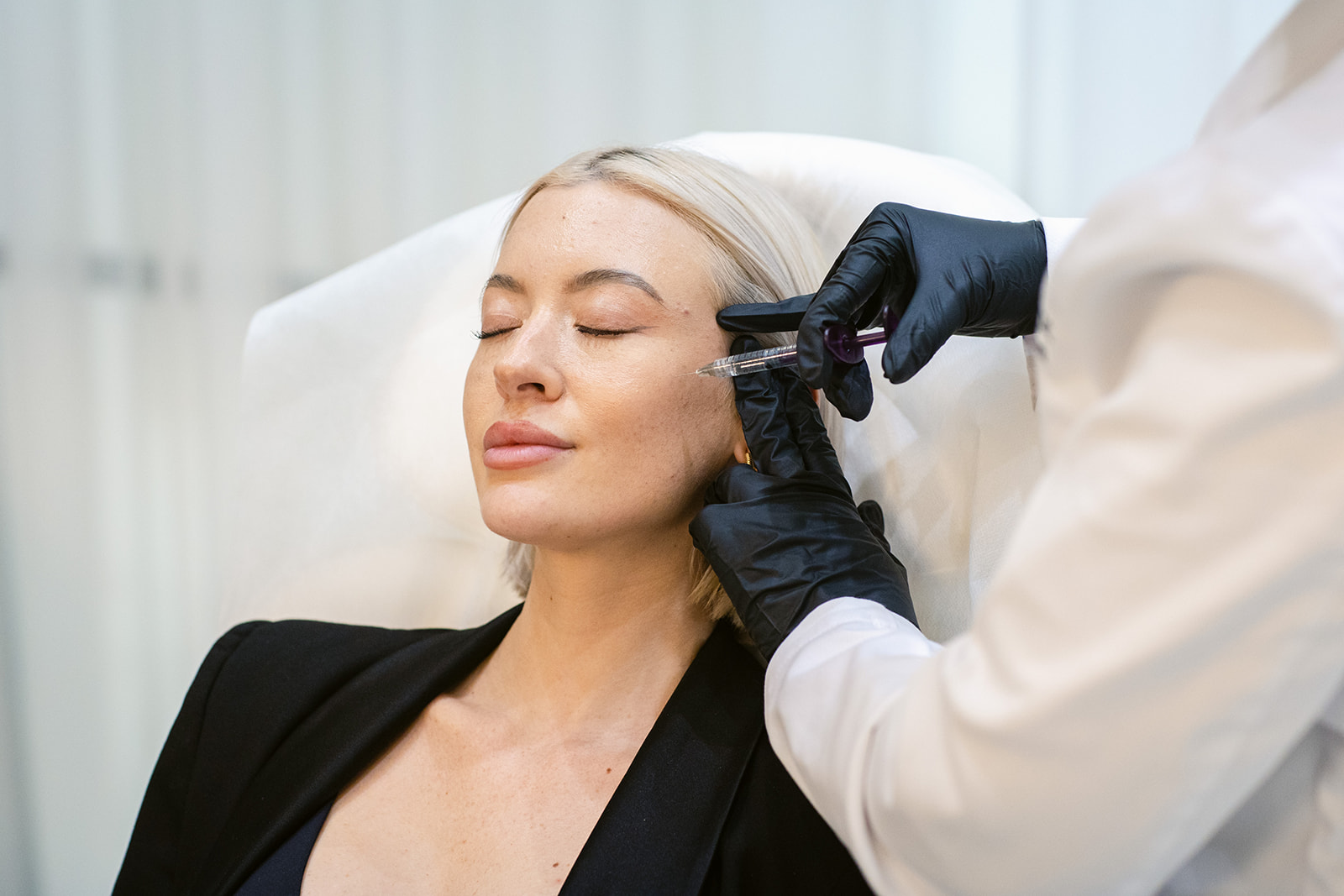
Botox is the trade name for botulinum toxin type A — a purified neurotoxic protein derived from Clostridium botulinum bacteria. When injected in tiny, controlled doses into specific muscles, it temporarily blocks the nerve signals that cause those muscles to contract. The result: the overlying skin smooths, and lines caused by repeated facial movement soften or disappear.
In Canada, Health Canada has approved Botox (manufactured by Allergan, an AbbVie company) for both cosmetic and therapeutic applications. Other approved botulinum toxin products available in Canada include Dysport (abobotulinumtoxinA) and Xeomin (incobotulinumtoxinA) — all are botulinum toxin type A, and all work through the same mechanism, though with slightly different unit conversions and onset profiles.
The Science in Plain Language
Every facial expression you make — squinting, frowning, raising your brows — involves muscles contracting. Over thousands of repetitions across decades, the skin above those muscles develops permanent creases: forehead lines, frown lines, crow's feet. Botox doesn't fill these lines — it addresses the source of them by temporarily relaxing the muscle beneath.
The mechanism: botulinum toxin A cleaves a protein called SNAP-25 at the neuromuscular junction, preventing the release of acetylcholine — the neurotransmitter that signals a muscle to contract. Without that signal, the muscle cannot fire. The effect is temporary because nerve terminals regenerate over 3–4 months, restoring the signal pathway and muscle activity.
Areas Treated
with Botox
Botox is FDA- and Health Canada–approved for cosmetic use in the glabella (frown lines), forehead, and crow's feet. However, skilled injectors routinely treat a much broader range of areas off-label — a common and accepted medical practice for which there is extensive clinical evidence. Here is every area where Botox is used and what to expect from each:
How Many Units
of Botox Do You Need?
Unit dosing is one of the most commonly misunderstood aspects of Botox — and also where the most price confusion occurs. The honest answer is: it depends on your anatomy, muscle strength, the area being treated, and whether you want complete relaxation or subtle softening.
Below are clinically accepted dosing ranges. These are ranges, not fixed numbers — a 28-year-old woman with light crow's feet needs fewer units than a 52-year-old man with deep, etched lines from decades of squinting in the sun. Your injector should be quoting units to your face, not a number off a menu.
← Scroll to see full table
| Treatment Area | Typical Units | Longevity | Notes |
|---|---|---|---|
| Frown Lines (Glabella) | 15–25 | 3–4 months | FDA Approved Most frequently treated area |
| Forehead Lines | 8–20 | 3–4 months | FDA Approved Always paired with glabella |
| Crow's Feet (per side) | 10–15 | 3–4 months | FDA Approved Best-responding area |
| Brow Lift (per side) | 2–4 | 2–3 months | Add-on to forehead treatment |
| Bunny Lines | 4–8 | 3–4 months | Often added after frown line treatment |
| Lip Flip | 4–6 | 6–8 weeks | Shortest longevity of any area |
| Gummy Smile | 2–6 | 3–4 months | Highly technique-dependent |
| Chin Dimpling | 4–8 | 3–4 months | Often combined with chin filler |
| Neck Bands (Nefertiti) | 25–50 | 3–4 months | Requires precise anatomy knowledge |
| Jaw Slimming (Masseter) | 40–60/side | 4–6 months | Longest longevity; results build over 3+ sessions |
| Hyperhidrosis (Axilla) | 50–100/side | 6–12 months | Health Canada Approved |
"When a patient asks how many units they need, I look at their face — not a protocol sheet. A conservative 28-year-old preventative patient and a 55-year-old with deep lines are not the same treatment. Injectors who quote a flat unit count before examining you are cutting corners."
How Long Does
Botox Last?

The honest answer most clinics avoid giving: Botox lasts 3–4 months for most patients on their first few treatments. Full stop. Marketing that suggests 6-month longevity is typical is usually wishful thinking or cherry-picking — especially for patients new to the treatment.
That said, longevity does genuinely increase with consistent treatment over time. Here's why: as muscles are repeatedly kept in a relaxed state, they undergo mild atrophy (reduction in bulk). Less muscle mass means less force is needed to maintain the result with each subsequent treatment — and many patients with consistent annual treatment over 2–3 years do reach 4–6 month longevity.
Factors That Affect Longevity
- Metabolism rate — higher metabolic rate (common in younger patients and those who exercise intensely) correlates with faster breakdown
- Muscle mass — stronger muscles (particularly masseter and frontalis) require more units and may break down faster initially
- Treatment area — the lip flip lasts only 6–8 weeks; masseter Botox can last 4–6 months because the muscle is larger
- Consistency of treatment — patients who maintain regular intervals (every 3 months initially) reach longer longevity faster than those who wait until full movement returns
- Units used — under-dosing is the most common cause of early Botox wear-off
Baby Botox &
Preventative Treatment
Baby Botox — also called micro-Botox or preventative Botox — refers to using smaller doses of botulinum toxin to create subtle softening of expression lines while maintaining natural movement. Rather than fully paralyzing the target muscle, micro-doses reduce its contractile force, so lines soften but the face still moves and expresses.
This approach has become increasingly popular among patients in their late 20s and 30s who want to slow the development of static lines (lines visible at rest) before they become permanently etched into the skin. The science supports this: clinical research demonstrates that preventative botulinum toxin treatment significantly reduces the formation of permanent lines versus untreated controls over a 13-year follow-up period.
Is Baby Botox Right for You?
Baby Botox is ideal for patients who:
- Are in their mid-20s to early 40s with early dynamic lines (lines that appear with expression but not at rest)
- Want a natural result that preserves movement and expression — not a "frozen" look
- Have concerns about starting too early and looking overdone — micro-dosing is the conservative entry point
- Are in professions where maintaining expressiveness matters — performance, client-facing roles, public profiles
Baby Botox is not ideal for patients with deep, established static lines already visible at rest. Those patients need full-dose treatment to see meaningful results — and may also benefit from combining Botox with dermal filler or Morpheus8 skin resurfacing to address the existing depth.
See also: Botox at Monarch MD · Dermal Filler Guide
Botox vs. Dermal Filler —
What's the Difference?
This is the most common question new patients ask — and the confusion is understandable because both are injectable treatments performed in the same clinical setting. But they are fundamentally different in mechanism, purpose, and indication.
"Botox and filler are tools in a kit — not competing options. One relaxes, one restores. The question is never 'which one' — it's 'how much of each does your specific face need right now.'"
Ready for a
natural result?
Book a Botox consultation with Dr. Akbari — every treatment is personally performed by the surgeon, not delegated.
How Much Does Botox
Cost in Vancouver?
Botox pricing in Vancouver and West Vancouver typically ranges from $10–$16 per unit, depending on the clinic's credentials, the injector's qualifications, and the location. Here is what a realistic treatment costs at different levels of intervention:
← Scroll for full pricing table
| Treatment | Typical Units | Est. Cost (Vancouver) | Frequency |
|---|---|---|---|
| Frown Lines Only | 15–25 | $195–$400 | Every 3–4 months |
| Forehead + Frown Lines | 25–45 | $325–$720 | Every 3–4 months |
| Full Upper Face (3 areas) | 40–60 | $520–$960 | Every 3–4 months |
| Lip Flip | 4–6 | $52–$96 | Every 6–8 weeks |
| Jaw Slimming (both sides) | 80–120 | $1,040–$1,920 | Every 4–6 months |
| Nefertiti Neck Lift | 25–50 | $325–$800 | Every 3–4 months |
| Hyperhidrosis (both axilla) | 100–200 | $1,300–$3,200 | Every 6–12 months |
| Baby Botox (full face) | 20–35 | $260–$560 | Every 3–4 months |
The annual cost of maintaining Botox in your upper face with 3 treatments per year at $520–$700 per session is approximately $1,500–$2,100/year. For most patients, this is a more manageable way to think about the investment than a per-session cost.
At Monarch MD in West Vancouver, all treatments are performed by Dr. Eli Akbari directly — not delegated to a nurse or technician. View our transparent West Vancouver Botox pricing and treatment plans or book a consultation to have a plan developed by someone who understands the full anatomical picture.
What to Expect:
Before, During & After
Before Your Appointment
- Avoid blood thinners for 5–7 days prior if cleared by your physician: aspirin, ibuprofen, fish oil, vitamin E, alcohol — all increase bruising risk
- Do not schedule treatment within 2 weeks of a major event — Botox takes 10–14 days to reach full effect
- Arrive with a clean face — no makeup required but appreciated
- Inform your injector of all medications, supplements, previous neurotoxin treatments, and any medical history relevant to nerve or muscle conditions
- Bring reference photos if you have a specific result in mind — helpful for discussion, but experienced injectors will also assess what's appropriate for your anatomy
During the Procedure
A typical full-face Botox treatment takes 10–20 minutes from first injection to last. The process:
- Your injector assesses your face at rest and in motion, mapping the exact injection points based on your muscle anatomy
- The target area is cleansed and, if desired, topical anaesthetic cream is applied 20 minutes prior (most patients don't require it)
- Injections are administered with a fine 30–32 gauge needle — most patients describe a quick pinch per injection, lasting under a second
- Small wheals (bumps) appear at each injection site immediately after — these flatten within 20–30 minutes
- No bandaging, no recovery required — you walk out and return to your day
After Your Treatment
- Day 0–1: Avoid rubbing, massaging, or applying pressure to treated areas. No facials, no lying flat for 4 hours. Minor redness and possible small bruises at injection sites are normal.
- Days 3–5: Initial effects begin — muscles feel slightly heavier, lines start to soften. This is not the final result.
- Days 10–14: Full result is visible. If you're unhappy with anything at this point, contact your injector — minor adjustments can be made.
- Months 3–4: Movement gradually returns. Schedule your next appointment before lines fully return for best longevity over time.
Every Botox treatment at Monarch MD is performed by Dr. Akbari personally — not delegated. Assessment of facial anatomy and muscle dynamics is conducted before every injection.
Side Effects
& Safety
Botox has one of the most extensively studied safety profiles in all of medicine — with over 30 years of clinical use across both cosmetic and therapeutic applications and millions of treatments annually. Health Canada has approved botulinum toxin A for multiple indications.
That said, it is a medical treatment with real risks — which is exactly why injector qualification matters enormously. Here is an honest breakdown:
Common Side Effects (Expected, Temporary)
- Bruising at injection sites — the most common side effect; resolves in 3–7 days; minimized by avoiding blood thinners pre-treatment
- Headache — mild, occurs in approximately 10–15% of patients; typically resolves within 24–48 hours
- Temporary swelling or redness at injection sites — resolves within hours
- Tenderness at injection sites — usually resolves within a day
Uncommon Side Effects (Technique-Dependent)
- Brow ptosis (brow drop) — occurs when forehead Botox is placed too low or in too high a dose; the frontalis muscle is over-relaxed, dropping the brow. Prevents by treating the glabella simultaneously and using conservative forehead dosing. Resolves as Botox wears off (6–8 weeks for mild cases).
- Eyelid ptosis (lid droop) — rare; caused by toxin migration to the levator palpebrae muscle. Most commonly occurs with injections around the eye. Resolves spontaneously; Iopidine (apraclonidine) eye drops can provide temporary improvement.
- Asymmetry — may occur due to unequal muscle mass (common in the face) or technique. Minor asymmetries can often be corrected with a touch-up at 2 weeks.
- Frozen or unnatural appearance — not a complication in the medical sense, but a result of over-treatment or poor technique. Avoidable with an experienced, conservative injector.
Who Should NOT Have Botox
- Pregnant or breastfeeding patients
- Patients with neuromuscular disorders (myasthenia gravis, Lambert-Eaton syndrome, ALS)
- Known hypersensitivity to botulinum toxin or any product components
- Active skin infection at the proposed injection site
- Patients taking aminoglycoside antibiotics (which potentiate neuromuscular blockade)
Source: Allergan. BOTOX Cosmetic (onabotulinumtoxinA) — Full Prescribing Information.
How to Choose
the Right Injector
This is the most important section of this entire guide. Botox is only as good as the person injecting it — and in British Columbia, the regulatory landscape means that Botox can be administered by a wide range of practitioners, from Double Board Certified surgeons to aestheticians working under a loose medical oversight structure. The quality gap between the best and worst injectors in Vancouver is enormous.
Here is what to evaluate:
Credentials That Actually Matter
- Medical degree (MD) — Botox should be prescribed and administered or directly supervised by a licensed physician in BC. Know who is actually injecting you.
- Facial anatomy specialization — Facial plastic surgeons, plastic surgeons, dermatologists, and oculoplastic surgeons have the deepest training in facial anatomy. This matters when something goes wrong — and when preventing complications in the first place.
- Board certification — in Canada, look for FRCSC (Fellow of the Royal College of Surgeons of Canada) designation in a facial subspecialty. This is the gold standard.
- Volume of treatment — experience matters. An injector performing 50+ Botox treatments per month develops a pattern recognition for muscle anatomy variation that cannot be taught in a weekend course.
Red Flags to Avoid
- Heavily discounted pricing that seems too good to be true — usually means diluted product, inexperienced injectors, or both
- Injectors who quote a fixed unit count before examining your face
- Clinics where you never meet the supervising physician
- Before/after photos that show over-treated, frozen-looking results — that's not a testimonial, it's a warning
- Pressure to purchase packages or upsells during the consultation
- No medical intake process — contraindications to Botox are real and should be screened
"The consultation should feel like talking to a doctor, not a salesperson. If the injector isn't asking about your medical history, medications, and previous treatments — walk out."
Frequently Asked
Questions
The Bottom Line
Botox is safe, effective, and — when done well — completely undetectable. The treatment itself is almost incidental. What separates a great outcome from a forgettable or regrettable one is the physician behind the needle: their anatomical knowledge, their aesthetic judgment, their willingness to use less rather than more, and their understanding of how your face works as a whole system — not a collection of independent wrinkles to flatten.
If you're considering Botox in Vancouver or West Vancouver for the first time, or if you've had it before and haven't been fully satisfied with the result, the conversation starts with a proper consultation. Not a sales pitch — a medical assessment.
Ready for natural, refined results? Explore our Vancouver Botox treatments and before/after gallery, or book your consultation at Monarch MD to see what a physician-led approach actually looks like.
- Carruthers A, Carruthers J. Clinical indications and injection technique for the cosmetic use of botulinum A exotoxin. Dermatol Surg. 1998;24(11):1189-1194. doi.org/10.1111/j.1524-4725.1998.tb00001.x
- Binder WJ, Blitzer A, Brin MF. Treatment of hyperfunctional lines of the face with botulinum toxin A. Facial Plast Surg Clin North Am. 1998;6:179-198. PubMed
- Rossetto O, Pirazzini M, Montecucco C. Botulinum neurotoxins: genetic, structural and mechanistic insights. Nat Rev Microbiol. 2014;12(8):535-549. doi.org/10.1038/nrmicro3295
- Allergan Inc. BOTOX Cosmetic (onabotulinumtoxinA) Prescribing Information. Irvine, CA: Allergan; 2023. allergan.com
- Health Canada. Botulinum toxin products — Regulatory overview. canada.ca
- Kane MAC. Classification of crow's feet patterns among Caucasian women: the key to individualizing treatment. Plast Reconstr Surg. 2003;112(5 Suppl):33S-39S. doi.org/10.1097/01.prs.0000082163.02363.07
- Carruthers J, Carruthers A. Botulinum toxin type A: history and current cosmetic use in the upper face. Semin Cutan Med Surg. 2001;20(2):71-84. doi.org/10.1053/sder.2001.25137
- American Society of Plastic Surgeons. 2023 Plastic Surgery Statistics Report. plasticsurgery.org