Skip to content
West Vancouver · Pigmentation & Redness

Reveal your
brightest,
clearest skin.

IPL uses broad-spectrum light to target and break down pigmentation, redness, and broken blood vessels — while stimulating collagen for smoother, more even-toned skin.

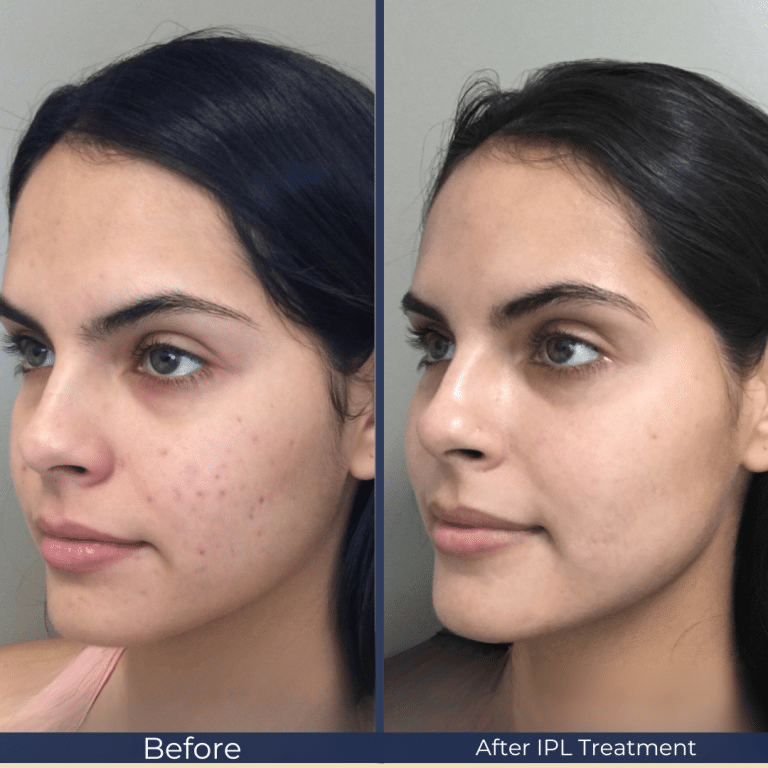
IPL before and after results — sun damage, pigmentation and redness treatment at Monarch MD
Fig. 1 — IPL Before & After
IPL treatment before and after — sun damage and uneven skin tone
Fig. 2 — Before & After
Intense Pulsed Light

IPL is right for
you if…

IPL (Intense Pulsed Light) is a non-invasive skin treatment that uses light energy to reduce pigmentation, redness, and vascular lesions — leaving your skin clearer, more even-toned, and visibly younger without surgery or significant downtime.

You have sun damage, age spots, or freckles
You have rosacea, facial redness, or broken capillaries
You want to reduce acne scars or uneven skin tone
You want a quick, non-surgical treatment with minimal downtime
3–5
Sessions
Typical course for full correction
20–45
Minutes
Quick enough for a lunch break
Min.
Downtime
Mild redness resolves in hours to days
Board Certified
Every treatment overseen by Dr. Akbari
The Science

How IPL
works.

1
Light pulses penetrate the skin

Broad-spectrum light pulses pass through the outer skin layer without damaging the surface — reaching the targeted pigment and blood vessels below.

2
Melanin and hemoglobin absorb the light

The light is selectively absorbed by melanin (responsible for dark spots) and hemoglobin (in blood vessels) — leaving surrounding tissue untouched.

3
Light converts to heat, breaking down targets

Absorbed light energy converts to heat — fragmenting the pigment clusters or collapsing the unwanted blood vessels into tiny particles.

4
Your body clears the particles naturally

The fragmented pigment and collapsed vessels are naturally reabsorbed and eliminated by the body over the following days and weeks — revealing clearer, more even skin.

5
Collagen production is stimulated

The controlled thermal energy also triggers new collagen production in the dermis — improving skin texture, firmness, and overall tone with no surgical intervention.

IPL before and after — sun damage and pigmentation treatment results
Fig. 3 — Before & After IPL
IPL vs. Laser — what's the difference?

Laser uses a single focused wavelength for highly targeted treatment. IPL uses a broad spectrum of light wavelengths — making it more versatile for treating multiple concerns (pigmentation, redness, and texture) simultaneously in a single session.

Post-Treatment

What to expect
after IPL.

Hours 1–6
Immediately After

Mild redness and slight warmth in the treated area — similar to a light sunburn. Dark spots may temporarily darken before they fade. Most patients leave the clinic and carry on with their day.

Day 2–7
The Darkening Phase

Pigmented areas typically darken and may appear as "coffee grounds" on the skin surface before flaking off. This is the treatment working. Avoid picking — let natural shedding occur.

Week 2+
Results Emerge

As pigment clears and collagen remodelling begins, skin becomes noticeably brighter and more even. Full results continue to improve for several weeks after the final session.

Essential aftercare: Apply broad-spectrum SPF 30+ daily and avoid direct sun exposure for at least 2 weeks post-treatment. Avoid hot showers, saunas, and vigorous exercise for 24–48 hours. Sun protection is critical to preserving results long-term.

Clinical Results

IPL before & after
results.

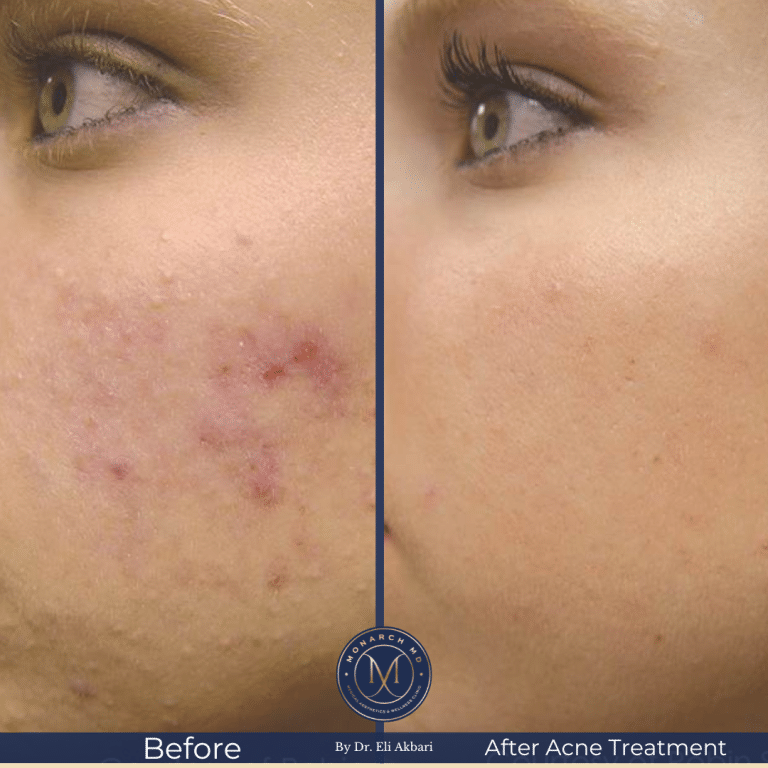
Real patient results from Monarch MD. Individual outcomes vary based on skin type, pigmentation depth, and number of sessions. All treatments overseen by Dr. Eli Akbari.
IPL before and after — sunspot and pigmentation clearance
Sun Damage & Pigmentation — Patient Result
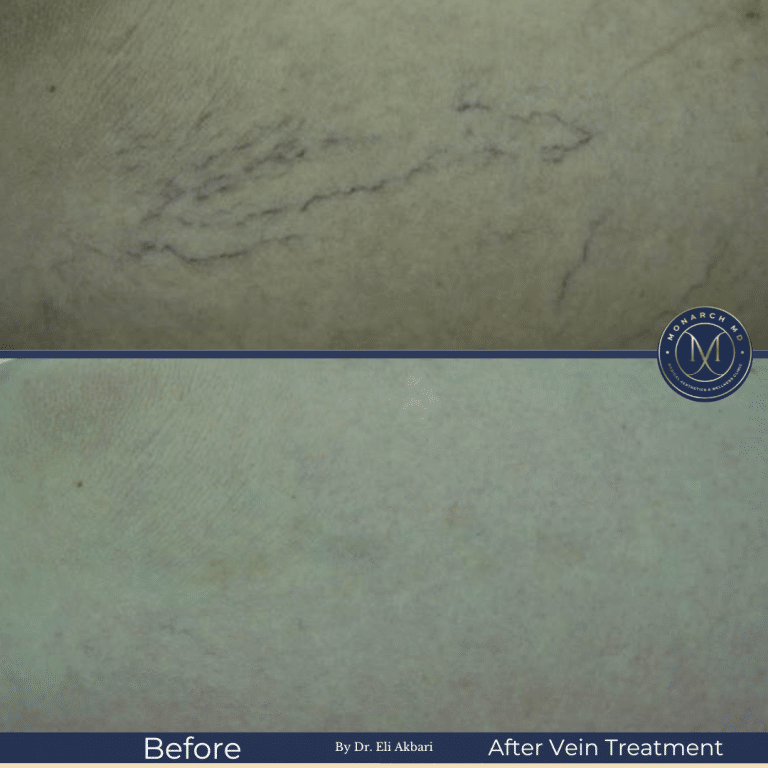
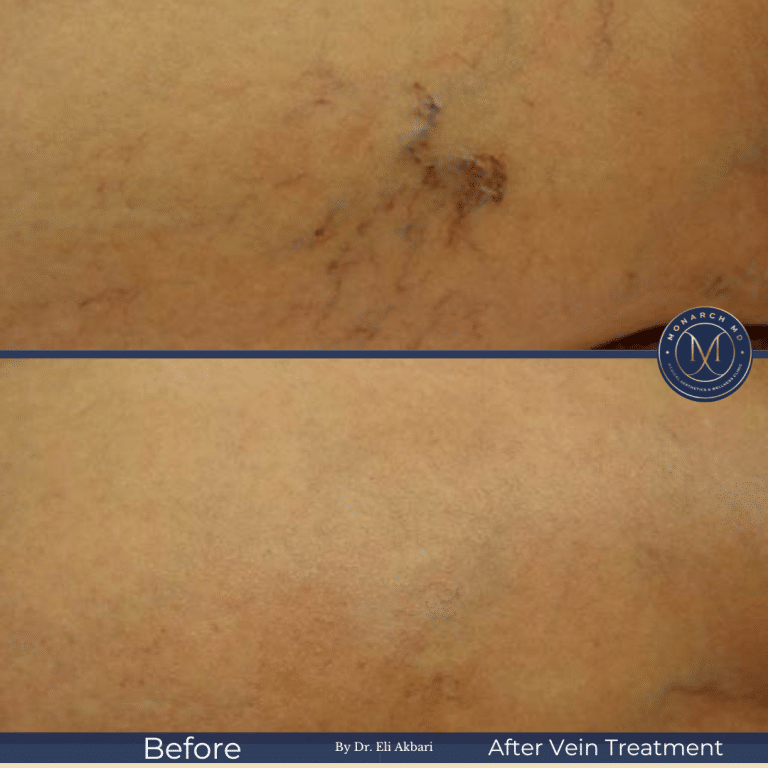
IPL before and after — redness and vascular lesion treatment
Redness & Vascular Lesions — Patient Result
IPL before and after — uneven skin tone improvement
Uneven Tone — Patient Result
IPL before and after — acne scarring and discoloration
Acne Scarring & Discoloration — Patient Result

Individual results may vary. Photos unretouched.

What We Treat

Conditions IPL
addresses.

Sun Damage & Sunspots

Targets melanin clusters caused by UV exposure — fading age spots, freckles, and diffuse sun damage across the face, neck, chest, and hands.

Rosacea & Facial Redness

Collapses the dilated blood vessels responsible for chronic facial redness and flushing — significantly reducing rosacea symptoms and improving overall skin tone.

Broken Capillaries

Targets spider veins and broken blood vessels visible on the surface of the nose, cheeks, and chin — eliminating them without scarring or downtime.

Acne & Acne Scarring

IPL's anti-inflammatory effect helps reduce active acne and post-inflammatory hyperpigmentation — while collagen stimulation gradually improves the texture of existing scars.

Uneven Skin Tone

Addresses diffuse discoloration, melasma (where suitable), and patchy pigmentation — restoring a more uniform, clear complexion across the treated area.

Skin Texture & Fine Lines

The collagen-stimulating effect of IPL improves skin texture and softens fine lines over time — making it a versatile rejuvenation tool beyond just pigment correction.

Patient Experiences

What our patients
say.

"After three IPL sessions, my sunspots faded noticeably and my skin tone looks so much more even. Definitely worth it."

"I was skeptical, but IPL actually reduced the redness on my cheeks from rosacea. It's not perfect, but it's a huge improvement."

"I had stubborn broken capillaries on my nose and IPL got rid of most of them. My nose looks so much better now."

Most Commonly Asked

IPL FAQ —
Vancouver patients.

IPL (Intense Pulsed Light) is a non-invasive skin treatment that uses broad-spectrum light energy to reduce pigmentation, redness, and uneven skin tone. It's a popular choice for those seeking clearer, more youthful skin without surgery or significant downtime.
IPL is most effective for light to medium skin tones and may not be suitable for very dark skin. A consultation with our team is essential to assess your Fitzpatrick skin type and determine whether IPL is the safest and most effective option for your specific concerns.
Most patients see noticeable improvements after 3 to 5 sessions. The exact number depends on the severity of your concerns and your goals. Sessions are typically spaced 3 to 4 weeks apart, and your treatment plan will be personalized during your consultation.
IPL has minimal downtime. You may experience mild redness or swelling that subsides within a few hours to a couple of days. Treated pigmented areas may temporarily darken before flaking off — this is normal and expected. Most patients return to normal activities the same day.
Most patients describe IPL as a quick snap of a rubber band against the skin. The procedure is generally very well-tolerated. Cooling gel is applied beforehand and the sensation is brief with each pulse.
With proper sun protection and skincare, IPL results can last from several months to a few years. Pigmentation and redness can return with ongoing sun exposure, so daily SPF and periodic maintenance sessions are key to preserving results long-term.
Avoid sun exposure and tanning for at least two weeks before your session. Discontinue retinoids and exfoliating products a few days beforehand. Arrive with clean, product-free skin. Daily SPF is required both before and throughout your treatment series.
Yes — IPL pairs well with chemical peels and microneedling for enhanced skin rejuvenation. A consultation will help you design a personalized multi-modality treatment plan that addresses all of your skin concerns comprehensively.
IPL is not limited to the face — it can effectively treat sun damage, pigmentation, and redness on the neck, chest, hands, arms, and legs. Any area with visible UV damage or vascular concerns can be addressed.
Laser uses a single focused wavelength for highly targeted treatment of specific concerns. IPL uses a broad spectrum of wavelengths, making it more versatile for simultaneously addressing pigmentation, redness, and texture in one session. The right choice depends on your specific skin goals.
Fall and winter are ideal since UV exposure is lower and it's easier to protect the skin post-treatment. That said, IPL can be done year-round — as long as you strictly protect your skin from sun exposure before and after each session.
IPL may not be suitable for those with very dark skin tones, active infections, pregnancy, a history of keloid scarring, or certain medications that cause photosensitivity. A full consultation and skin assessment will confirm whether IPL is appropriate and safe for you.
West Vancouver · MD-Led Clinic

Every treatment personally
overseen by Dr. Eli Akbari.

Double Board Certified Facial Plastic Surgeon. MD-led IPL in West Vancouver — not a medspa, not a chain.

Check Pricing

Fill out the form below, and we will be in touch shortly.

Select all services you're interested in